Showing posts with label argo. Show all posts

Friday, November 25, 2022

One-timers I worry won't hold up

The movie Juno came up for discussion on Filmspotting in a recent episode -- an episode I was listening to on my way in to work on Wednesday -- where they were talking about great father-daughter pairings at the movies. (I'm actually wondering about the wisdom of mentioning Juno in this context nowadays, considering that Elliot Page was clearly playing a daughter in that movie, but identifies as a man now.)

They played a clip that reminded me how much I liked that movie, having named it my #3 movie of 2007. And also how the writing was specifically one of the things I liked about it, something it's easy to forget since we all turned on Diablo Cody rather quickly.

But I haven't gone back to watch Juno again, in part because I'm worried that when Rainn Wilson calls Page "home skillet," it'll seem pretty cringey. Is that reason enough not to rewatch a movie that once made my top three for a year? Almost certainly not.

So I decided to go through my Flickchart and identify other favorite movies I've seen only once to see if fears like this are holding me back there as well. For the purposes of this exercise, a "one-timer" is just as simple as it sounds: a movie I've seen only once. I'm clarifying because sometimes we use that term to describe a movie we can bear to see only once because it's so confronting or triggering, even though it may be excellent.

I'll do ten, and I'll list them in order of where they appear on my Flickchart, with the number serving as the number this movie is ranked out of 6182 films. And just to make the project slightly easier, I won't exclude Juno from the group.

173. Rushmore (1998, Wes Anderson) - This remains one of the movies it's weirdest that I've never rewatched. It took what I thought I had discovered with Wes Anderson in Bottle Rocket and absolutely crystallized it. I still think of it as one of my top few Anderson movies. However, I've also turned on Anderson enough over the years -- specifically his last film, The French Dispatch -- that I'm worried some of his later fussy quirks might spoil my so-far pristine feelings about Rushmore, since I'll be confronted with the fact that they were there all along. There's still no excuse for not watching this again, though, so I probably will. I should be further encouraged by the fact that a recent rewatch of The Royal Tenenbaums actually turned me from a Tenenbaums hater (or disliker, at least) to a Tenenbaums lover.

353. Good Night, and Good Luck. (2005, George Clooney) - This ranked even higher than Juno, ending its year as my #2 movie, behind only Hustle & Flow. I'm not so much worried that this has aged poorly as that my affection for it was inflated to begin with. The fact that it feels like a chore to potentially watch it again is a good indication of how my thoughts may have changed on it -- though it's not like I'm always stumbling across it on streaming and choosing not to watch it. 

372. Face/Off (1997, John Woo) - This is another case, as with Rushmore, of later-developed feelings about a director likely ruining a film for which I had uncomplicated affection the first time around. When I think of John Woo today, I think "That's that hack who puts doves into scenes of slow-motion gunplay, no matter how ridiculous." Yes, there are incongruous doves in the climax of the Ben Affleck vehicle Paycheck -- even though that scene takes place underground. 

378. Oldboy (2003, Park Chan-wook) - I think I really like Oldboy -- at least I'm ranking it that way on Flickchart -- but am I sure? I am not sure. I think I may have constructed a narrative here. I do remember that when I was watching it a friend's house, we were into it, but we did find some things confusing. I also remember that another friend was in the room but was not reading the subtitles, and then complained that he didn't know what was going on -- which is sort of hilarious, because obviously. I worry that if I watch this again, the fact that Park has been more hit than miss for me in the past ten years -- The Handmaiden being the exception -- will make me realize we were right to be confused about the poor storytelling the first time.

381. Juno (2007, Jason Reitman) - Home skillet. As discussed. 

422. Mr. Nobody (2009, Jaco van Dormeal) - The extremity of my positive reaction to this the first time around -- I gave it five stars on Letterboxd -- is more why I'm including it here than me secretly thinking it might not be good, and avoiding it for that reason. I'm actually not avoiding this movie per se, and have a couple times considered watching it again. But I think it slips in and out of availability on streaming, and the fact that I'm not willing to pony up to rent a movie I gave five stars suggests I think there was some excess positivity in my response. 

434. A Beautiful Mind (2001, Ron Howard) - I ranked this movie in my top ten of 2001 and remember being genuinely moved by its climax. I'm now more ashamed of the type of movie it is, and having this reaction to a movie that seemed so pointed at Oscar glory, than I am doubting that I'd tear up again at the end of a second watch. A Beautiful Mind is not in the same category of regrettable Oscar winner as Crash or Green Book, but it's not something people regularly talk about today, and there's probably a reason for that. 

485. Erin Brockovich (2000, Steven Soderbergh) - Erin Brockovich was, until recently, my highest ranked Soderbergh film -- but you also know from this post that I don't tend to rewatch any Soderbergh. Out of Sight has now gone ahead of it, Traffic is just behind it, and I've also now rewatched both Side Effects and Full Frontal, the former confirming my affection for it, the latter dropping it significantly in my estimation. When I first discovered that Brockovich was my highest ranked Soderbergh, I instantly doubted it, because (like A Beautiful Mind) of the type of film it is -- a legal drama about an unlikely crusader. Does not seem as worthy as his other output, and I haven't checked again to confirm whether it actually is. 

494. Argo (2012, Ben Affleck) - Another questionable best picture winner that made my top ten in the year of its release. I assume I would still actually like Argo, but it feels like a strange best picture winner in retrospect -- not a film anyone hates, but a film we all kind of forgot won. If you were recounting the best picture winners from the 2010's, this is the one you would forget. (You wouldn't forget Green Book, even though it's a worse movie, just because of how mad it made you when it won. Argo didn't make anybody mad. In fact, I'm not sure it inspired great love or great hatred in anybody.)

503. Away We Go (2009, Sam Mendes) - A friend of mine was the one who gave me doubts about this one. I really embraced this movie, again ranking it in my top ten for the year, but a friend had a wildly different reaction to it at the time, as I wrote about here. Apparently I have secretly wondered since then if he was always right. 

That's ten.

And yet an argument can be made that if I am ranking a movie in my top 500 on Flickchart -- Away We Go is the only one of these that (narrowly) misses that cutoff -- it's something I do really like. Or at worst, I should watch it again to ensure it deserves its lofty ranking. If it doesn't, I should begin busting it down to where it really belongs in my rankings. (A fate that befell the aforementioned Full Frontal, among other that spring to mind, such as Igby Goes Down.)

Given then I've already identified ten and it would be easy enough to come up with two more, it might make for a good monthly series one of these years -- except that I've already done something like this with what was then a weekly series in 2010, conducted over a couple months, called Double Jeopardy. At that time I subjected such films as Disney's The Kid, Click, U-Turn, Alpha Dog and Bedazzled to a new viewing to confirm my previous affection. But in none of those cases were the films ranked as highly as these are. (However, the series also helped boost two others into this rarefied air, as it made me realize my love for The Life Aquatic With Steve Zissou and The Story of Us were intense enough to call them legitimate personal favorites.)

For now it's useful just to have identified this list. That way, if I have a random night where I can't figure out what to watch, and one of these titles appears before me on Netflix or Amazon, I'll remember I have this unfinished business. 

Sunday, October 27, 2013

A greater understanding of editing


A recent article I read on The Onion's AV Club (thanks Scott) underscored something that had occurred to me independently about a week before I read the article:

Editing is one of the key elements of filmmaking, and I don't really know how to tell good from bad.

Okay, I can tell bad when I see it. Everyone can. Bad editing can make a movie seem more shoddy than any other bad element of that movie, even the acting, if it is done poorly enough.

So the thing I really don't know how to tell is good from great. And that's what I'd like to improve.

Toward that end, I'm going to go back and watch a number of winners of the best editing Academy Award with a specific eye toward appreciating what makes their editing so great. I don't know how I'm going to write about this project on the blog, though I would like to check in periodically to discuss my findings. I don't think I can commit to anything so regular as a monthly series -- though it's certainly possible that I will watch more than one of these Oscar winners per month.

The interesting though perhaps unsurprising thing is, many of the winners of the best editing Oscar were also the best picture winners that year. Such as Argo, which is why I'm using it as the art for this post. This tells me that even the members of the Academy don't have a perfect grasp on what distinguishes a good editing job from a great one. Of course, the five nominees themselves are determined by other editors. But from there, one would guess that most Academy members throw their votes toward the movie they're voting for the most in other categories -- which in most cases is the movie that takes the top prize.

So I think it will be interesting to focus on movies that didn't win best picture, but did win the editing Oscar. That's a good way of limiting my choices. In fact, I noticed in perusing the winners that two straight David Fincher movies won best editing -- The Social Network and The Girl With the Dragon Tattoo -- without either winning best picture. It was the same editing team for both, as you might expect -- Kirk Baxter and Angus Wall. The fact that you've never heard of these guys tells you how little editing is appreciated outside of the small circles of people who really know about it.

Since The Social Network was the movie I thought of randomly when considering films with great editing, even without consciously remembering it had won the award, that means I do have some instinctive sense of what makes editing great. I'd like to polish that sense into something more confident, though.

I don't know which movie I'll watch first, as some of this relies on opportunity. However, I intend to get started soon.

Consider yourself notified. 

Wednesday, February 27, 2013

Oscars, East Coast style


I remember what it was like to have to stay up until almost midnight to finish watching the Oscars telecast.

In fact, I remember because it happened to me on Sunday -- even though I live in Los Angeles, where the show starts at 5:30.

I capped off one of my strangest Oscar Sundays in recent memory by starting the show at almost 9 p.m. and somehow, some way, managing to watch all the way through to the end.

The day was so strange because it began in a hotel room with breakfast in bed, continued to a hike in Fryman Canyon with my wife, my dad, his wife and my son, and then segued naturally into four-plus hours of nailing pickets to a fence with a nail gun. That's not even counting the nearly three hours I was awake with insomnia in the hotel, from about 12:50 to about 3:30. What did you do on Oscar day?

When my weary bones arrived back home from returning the nail gun to Home Depot, having spent a thousand rounds on the fence, I could have gone to sleep right then. But we had a leisurely dinner of roasted chicken that my stepmother made before my wife and my dad joined me for the first half of the show. They eventually peeled away, but I stuck it out to the bitter end.

And the end wasn't so bitter, actually. I was really pleased to see Argo win the statue, as it was my second-highest ranked of the nominees, and my highest ranked with a reasonable shot of winning. (Silver Linings Playbook had some momentum at one point, but was probably never a real contender.) That makes two years in a row where the Academy has bestowed the statue on my second favorite of the nominees, which makes me wonder if my streak of being disappointed by the outcome in alternating years is finally over. Then again, these Oscars were probably going to please me no matter what, considering that the other top contender (Lincoln) was only two slots behind Argo on my year-end list (#5 vs. #7). As nice as Ben Affleck's acceptance speech was -- nicer for not being polished, I thought -- somehow George Clooney managed to make that moment his just by doing nothing but looking on with sage paternalism. Clooney has accepted Oscars before, and didn't feel the need to take the moment from either Grant Heslov or Affleck. A class act through and through.

The same cannot be said for the rest of the show. When it wasn't dull, it was groan-worthy. But that's all I'm going to say about that. If there had been a time for a full Oscar recap replete with catty comments, it would have been yesterday. But I had too much catching up to do at work, and just couldn't manage it. So you get a slightly stale Oscar piece a day late and a dollar short.

It's kind of appropriate that Affleck, a fellow Bostonian, finished the first Oscar night in over a decade that I watched on the same timeframe as if I'd been in Boston myself. For one night, I felt again like that wide-eyed junior high kid in the suburbs of Boston, who had just discovered this tremendous thing called the film industry, and needed to use whatever means were at my disposal to stay up until the very end to see who won.

However, I seem to remember fewer nail guns back then.

Tuesday, December 11, 2012

The next Casey Affleck


When I saw the name Scoot McNairy in the closing credits for Killing Them Softly on Saturday, I thought "Okay, maybe I did know that actor who played Frankie." Except just because I could identify the name (it's a pretty unforgettable one) didn't mean I could identify the face. I still didn't remember how I knew him, only that I remembered reading his name recently.

It was only on the drive home that I realized that Scoot McNairy was also in Argo, in quite a different role. No wonder I wouldn't have recognized him, beyond a vague sense that he looked familiar.

In Softly, McNairy plays a lowest-guy-on-the-totem-pole hood who is hired to rob an illegal card game. The Dallas-born actor gives us one of those Boston accents that's authentic enough that only people from Boston (see: Affleck family) can usually produce them. In Argo, however, he's one of the state department employees stranded in the Canadian ambassador's Tehran home, a bit of a pipsqueak actually, though he ultimately asserts his will more than any of the other characters in his position. Still, it's a huge difference in overall physicality between the two roles.

But it's not just his physical appearance and range that cause me to compare him to Casey Affleck. In fact, these two roles suggest McNairy may exceed Affleck in terms of range.

What causes me to compare him to Affleck is that it's kind of a surprise Affleck himself was not cast in these two roles.

Killing Them Softly was directed by Australian director Andrew Dominik (hence the casting of the terrific Australian actor Ben Mendelsohn, whom you may remember from his unforgettable role in Animal Kingdom). Dominik also directed The Assassination of Jesse James by the Coward Robert Ford, which starred his Softly leading man Brad Pitt ... and Casey Affleck.

Argo was directed by Ben Affleck ... Casey's brother.

The fact that McNairy was cast in films directed by two people who have a history with Casey seems to suggest that both directors were going for "a Casey Affleck type" in those roles, since for one reason or another they were not able to hire the genuine article. Or perhaps both directors didn't want to be so predictable or on-the-nose, Dominik feeling like he didn't want to return both leads from his previous film, and Affleck feeling he'd already made too many movies featuring his brother (though older brother only directed younger in Gone Baby Gone).

And though I once thought otherwise, being "a Casey Affleck type" is most certainly a good thing.

When Casey first emerged as a person I was aware of, a couple years after Ben became famous, I thought he seemed like a bit of a piss ant, a smirking, substance-free beneficiary of all that nepotism has to offer.

This was not based on any of his film work, mind you. It was an impression born almost entirely of my limited perception of his public persona, and I must assume it was based on something very irrational. I still didn't particularly like him in the small roles in which I saw him, but that's probably because they didn't provide him enough screen time to overcome my petty impression of what he brought to the table. Sometimes you just have an instinctive negative response to someone, you know?

But by the time he commanded the screen in the aforementioned (Affleckmentioned?) Gone Baby Gone, I decided that Ben's little brother had some serious chops. And I decided that maybe the thing I hadn't liked about him was what made him so different from his brother, whom I did initially like and like again now (let's forget about those intervening "dark years"). While Ben had classic leading man good looks and was on the path toward becoming a genuine movie star, Casey had the squirrelly appearance you usually associate with a character actor.

Traditionally, which of these two archetypes is the better actor? You guessed it -- the character actor, who isn't handsome enough to skate by on his looks, and therefore has to bring it every time. Which Casey basically does.

There's a place in this world for both Bens and Caseys, but if you appreciate the craft of acting, you are usually better off with the Caseys. To take it out of the Affleck family -- George Clooney is incredibly fun to watch, but if you want an award-worthy performance, you're probably better off seeing a Paul Giamatti movie. (I say this, of course, knowing that the current Oscar tally for these two actors is Clooney 1, Giamatti 0. Clooney also has more nominations and has also been nominated as a director and screenwriter. Okay, maybe I picked bad examples here.)

If McNairy's 2012 work is any indication, he could easily become the next type of actor producers would die to have in their movie.

"Get me the next Scoot McNairy!"

Thursday, October 25, 2012

The rise of directors named Ben


I notice patterns. It's who I am.

Not all the patterns I notice mean anything. But that doesn't mean I won't write about them here.

Like, what's up these days with all the prominent directors named Ben? Or some variation of that spelling?

Earlier this year, Benh Zeitlin took the film world by storm with his memorable feature debut, Beasts of the Southern Wild. A young whippersnapper by industry standards, Zeitlin just turned 32.

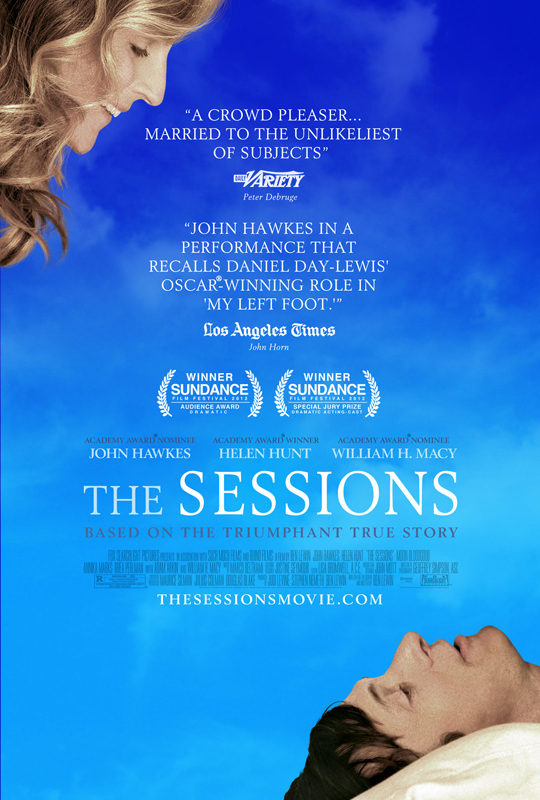
But you don't have to be a young Ben (or director Ben Younger) to be making a name for yourself in 2012. Last Friday, one of the most buzzed about movies of the fall, The Sessions, opened. Its director? A 66-year-old Australian named Ben Lewin, who hadn't made a feature since 1994's Paperback Romance.

Meanwhile, one of the most buzzed about movies of the year, period, is Argo, directed by Ben Affleck.

Could the best director race this year feature three Bens? There's an outside possibility that it could.

Unfortunately, that's about as much evidence as I can give you. Though I will have a little bit more when Ben Stiller's The Secret Life of Walter Mitty comes out next year. That one should be interesting. 

Like I said, it's a pattern that doesn't mean anything. Nothing to see here. Move along. Move along.