Showing posts with label audient bridesmaids. Show all posts

Wednesday, February 25, 2026

Audient Bridesmaids: A Room with a View

This is the latest in a periodic series in which I'm watching all the best picture nominees I haven't seen, in reverse chronological order.

When I first envisioned the Audient Bridesmaids series, I imagined myself building up a head of steam on the project and occasionally rattling off a couple in a row. I did expect there also to be droughts, which is why this is periodic series rather than committed to some regular time interval. But I figured I'd still make steady progress on it.

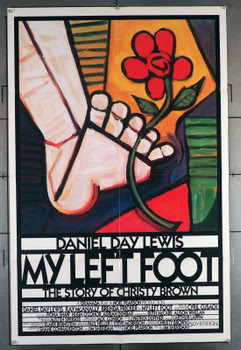
Well, before now, the closest two posts in the series were the four months between viewings of My Left Foot and I'm Still Here -- an old bridesmaid and a new bridesmaid -- last year between March and July. There was a similar gap in late 2022 and early 2023. If you take those two out, these have never come any closer than seven months apart.

I guess I must be getting serious now, because I just posted one of these 11 days ago when I saw Hope and Glory. And now I'm back with the unseen best picture nominee before that, James Ivory's A Room with a View, which I'll call from 1986 because it was nominated alongside the other 1986 nominees, even though many sites list its release year as 1985. 

Watching A Room with a View also enabled me to confront a childhood fear, which sounds like a strange thing to say about a movie that in almost every respect is a very light period romantic comedy. Considering this childhood fear, that certainly isn't how I would have pegged the movie.

The phrase "childhood fear" is a little misleading. It's not like I was afraid of A Room with a View the way some children are afraid of the dark or of a monster under the bed. But I did have a traumatic experience of sorts with the movie, one that has stuck with me all these years later.

It occurred on an airplane. I'm guessing it was the summer of 1987, because that's consistent with when this movie might have appeared on an airplane. My family would have been going on a trip to the Rocky Mountains. However, it's possible it was a year earlier than that, when my family did our summer trip to the UK -- which would make a bit more sense because a) the movie is set in the UK, and b) that trip would have been only about three months after the film's theatrical release. Whichever year it was, it was almost 40 years ago.

I hadn't paid to get headphones for this movie -- which I don't think my parents would have done even with a movie that was tailored to a 12- or 13-year-old -- but that didn't mean I was immune to seeing its images. And I clearly remember getting up from my seat to go to the bathroom and seeing this:

I think I might have literally stumbled backward.

Seeing the context that led up to this -- a brief fight in a Florence square that otherwise has nothing to do with the story, with minimal impact on the characters -- might have made it less shocking. But it was first laying my eyes on the screen and seeing this soon-to-be-dead man covered in blood, and eyes wild with the fear of approaching death, or maybe already dead -- well, it was a lot for preteen me to handle.

I don't think I had nightmares about it or anything, but it did always surround A Room with a View with a certain fascination on my part. 

As I said, this ends up being a complete anomaly within what amounts to one of the most whimsical Merchant-Ivory movies of this period -- or any period. And I enjoyed all of it quite a bit.

There isn't a huge amount to the plot. It's basically a chamber piece set across two settings, Florence and England, in which Helena Bonham Carter's character tries to forget her brief infatuation with Julian Sands' character, while entertaining a more practical engagement with Daniel Day-Lewis' character, in the first decade of the 20th century. Incidentally, this is the youngest I would have ever seen Day-Lewis on screen. This performance wasn't enough to get him Oscar nominated -- the nominations in this movie went to Denholm Elliott and Maggie Smith -- but he does play quite the clueless prig. And he'd win his first Oscar only three years later, in the aforementioned My Left Foot

Although I enjoyed the story, which went by for me on a cushion of delight, it was perhaps the performers that I enjoyed most here. I didn't anticipate how many names I might know in this film. There were the character actors from my personal favorites, like Elliott (Raiders of the Lost Ark) and Simon Callow (Four Weddings and a Funeral). There were the dames, one of whom we've lost (Smith) and one of whom is still with us (Judi Dench). There was poor Julian Sands, lost on that hiking trip. There's of course Bonham-Carter in the earliest of the two types of film for which she would become known (Merchant-Ivory films and Tim Burton films). And then any film with Day-Lewis is worth a watch.

I must admit, I didn't know Merchant and Ivory had such senses of humor, though of course credit there should probably go to their frequent collaborator, screenwriter Ruth Prawer Jhabvala. It's a really funny film and the actors are on board for it. She also earned an Oscar nomination for this script. 

I also didn't realize how few quintessential Merchant-Ivory films there actually are. This one is probably the most quintessential. They were such a known pairing at the time that it was almost as if they were a genre unto themselves. But really the only other significant M-I films from around this same time were The Bostonians (1984), Mr. & Mrs. Bridge (1990), Howards End (1992) and Remains of the Day (1993). Could there have been so few? Their producer-director collaboration featured a lot more movies than just these, of course, but then you get into a bunch of pretty obscure titles both before and after, films that were not responsible for whatever time they had in our zeitgeist. I guess they had a strong imperial period but then left the center of the culture. 

Fun fact: James Ivory is still alive! He's 97. Merchant, though, has been gone for 20 years now.

Don't expect another post like this in another 11 days, but when I do get to the next movie in this series, it will be Prizzi's Honor, the John Huston film from 1985. 

Saturday, February 14, 2026

Audient Bridesmaids: Hope and Glory

This is the latest in a periodic series in which I will ultimately watch all the best picture nominees that didn't win that I haven't seen, in reverse chronological order.

For the first time in this series that has been going on since 2022 and has featured a scant half-dozen films in those nearly four years, I've gotten to a movie I didn't really know anything about before going in. I was familiar with the title Hope and Glory from hearing it mentioned here or there, but I didn't know who was in it, who directed it, or what it was about. (And even after watching it, I don't really know who was in it. The only actor I recognized from anything else was Ian Bannen, and I only know him from one of his final films, a one-time favorite of mine, Waking Ned Devine.)

As it turns out, John Boorman's film is a coming-of-age story set against the backdrop of World War II in England. 

That sounds like it has the potential to be very boring. Or at least, it might not be the kind of thing we see made much in 2026. 

But I had a great time with this movie, which struck me as a cross between different sorts of movies that have worked well for me, at least in some cases. Its setting put me in mind of some of Terence Davies' films from this period, one I really like (Distant Voices, Still Lives) and one I don't care for as much (The Long Day Closes). However, in terms of its sense of making nostalgia fun rather than stuffy, it also reminded me of a family favorite that speaks to my dad's midwestern childhood, A Christmas Story, though Hope and Glory is surely not pitched at quite such a zany level, nor does it have as much narration, nor is it American in any sense. 

The Christmas Story comp may be inexact, but I offer it to show you just how much I enjoyed myself while watching this movie that (like A Christmas Story) follows one family, in this case over most of the war as they evade bombings and play around in the rubble afterward. 

The thing Boorman gets really right here, perhaps because this story is autobiographical, is what it would have been like to perceive the war from the perspective of a child, who isn't capable of comprehending just how serious its impacts were. This child and his friends are more likely to want to smash the remaining intact parts of decimated homes -- in a gleeful rather than an aggressive manner -- than contemplate the loss around them.

One perfect example of this is when a neighborhood girl, who appears to be around 13 or 14, loses her mother in a bombing, and is standing there looking sort of shell-shocked and vaguely miserable, yet still mostly composed, in among the rubble. There's this one boy running around telling all the other children, in the same tone he'd use if he just saw a UFO land on the lawn, that the girl's mother got killed last night. He's so excited to be the messenger that he has to tell every child he sees, and when they don't believe him, he invites them to go ask the girl. She confirms with sort of a sullen nod. As if this is not humiliating enough, and insensitive in a manner only a child could not comprehend, he then finds another disbelieving neighborhood child, and the whole embarrassing routine begins again. 

This should be fodder for great sadness and misery. Instead, it is a matter-of-fact testament to the whole "Keep calm and carry on" mentality that Britain adopted during the war, which helped them get through the most trying of times.

The boy that's a stand-in for Boorman, Billy (Sebatian Rice-Edwards), is nominally the main character, as he's the one who would be coming of age. But the film is a lot more interested in the movements of his mother Grace (Sarah Miles, who resembles a proto Emily Watson) and his older sister Dawn (Sammi Davis), who is constantly misbehaving, which results in her falling for and getting impregnated by a Canandian soldier. The father, Clive (David Hayman), is also a central figure, but because he's an enlisted man, he's not always there.

I suppose I should give a little plot. Grace wants to send her two youngest away, Billy and his younger sister, but has a change of heart on the train platform where they are to leave to be sent off to Australia. So she pulls them back and in turns forces them to endure the bombings that periodically level homes in their neighborhood, a decision she greatly regrets, but which does not end in tragedy. In fact, one of the reasons the film is so "fun," if that's the right word, is that it isn't lulling us just so it can wallop us with the big death of the father, the mother or the sister. All of these characters survive the movie, and I guess that's a spoiler, but I seriously doubt you were just about to watch a best picture nominee from 39 years ago that was obscure enough that a cinephile like myself didn't really know much about it.

It may be obscure to me, but I bet this was pretty celebrated in England in the 1980s, and it was enough of an artisitic and commercial success -- or at least, Boorman had enough clout -- that a sequel called Queen and Country was made in 2014. I'll have to put that on my list as well. 

It strikes me that the British film industry was really at the forefront during this era, as both the last film I watched in this series (1989's My Left Foot) and the next film I'll watch (1986's A Room With a View) are British, and I've already mentioned that Terence Davies was making celebrated films during this era. Of course, all of Merchant-Ivory's films, of which Room With a View is one, were from this part of the world. To be sure, the British film industry is not dead, but you don't see us talking about modern British films as big awards contenders the way we once did. 

I could and probably should go on providing other examples of things that made me laugh or made me nod with a sense of absorbing their truth. One of those is a memorable sequence where the characters have sort of a dance with an out-of-control unmanned dirigible in their neighborhood, something that has to do with repelling the German attack.

But many of these examples I would hypothetically provide are "typical" coming-of-age stuff. That is hardly meant as a criticism, more as a sense of pleasant familiarity. You know, scenes set at the movie theater, scenes of young boys seeing girls in their undergarments, that sort of thing. It's all very sweet and enjoyable and packaged together marvelously by Boorman.

Besides, I'm not trying to meet a particular word count here -- just telling you I saw another movie in this periodic series that isn't progressing as quickly as it should.

After this year's Oscars, I will have, in all likelihood, a new Audient Bridesmaid that needs to be watched before I can continue with the series' core mandate, which is that I always watch the most recent unseen Bridesmaid next, and am obstructed from continuing back into the longer ago history until I do. That movie will be Marty Supreme, assuming it does not win best picture, which it won't.

But maybe I'll try to watch either one or two more before then. Not because it's really any different to be beholden to watch any one particular film over any other particular film. It's just that I seem to lose steam on this project as the year goes on, especially if I don't feel particularly motivated to catch up with the best picture nominee I only just missed from the most recent year. So, I may try to fit in A Room With a View before the end of the month, and see how that goes, and if goes well, maybe even one more. 

Saturday, July 12, 2025

Audient Bridesmaids: I'm Still Here

This is the latest in a periodic series in which I watch best picture nominees I haven't seen, working backwards from the newest to the oldest.

Yes this is the latest in a series getting its first new entry since I watched My Left Foot in late February, meaning this is an unusually short amount of time between entries in Audient Bridesmaids.

But the real headline here is that this is the first blog post I have ever written, and will likely also publish, while on a plane.

I'm currently en route from Auckland to Los Angeles, where I'll spend about four hours before flying to Atlanta, where I'll spend about two days before meeting relatives for a reunion at a lake house that's about a three-hour drive from there.

It was while I was en route from Melbourne to Auckland that I watched I'm Still Here, the only 2024 best picture nominee I had yet to see, which usurped the spot of John Boorman's Hope and Glory (1987) as next up in this series by failing to beat Anora for 2024 honors. It was a good reminder that I need to pick up the pace a bit here, unless I want every movie I watch in this series to be a usurper.

But what a good usurper it was.

Before we get to the film proper, let me tie off this "blogging on a plane" topic.

This isn't the first flight I've ever had that had WiFi open to the internet at large -- you may recall how I enjoyed watching baseball on a plane in this post -- but it's definitely the first time I've blogged on a plane. This flight is 11+ hours and that one was only 5+, so you can appreciate that I'm craving the variety, even though I'm less than half the way in and have only watched one movie so far. So here I am. Because I'm typing with just one thumb on my phone, I might keep it short.

I'm Still Here, the Walter Salles film not the Casey Affleck film, immediately inserted itself right into the mix in a year where I had six best picture nominees in my top ten. It might have only been seventh, but then again Conclave, which my wife watched and loved while I was watching this, might have beaten it as well. Anyway it would have definitely beaten Anora and A Complete Unknown, likely top 15 material and definitely top 20.

Because it's a recent film and is only just coming off the period where it was being widely feted, I won't subject you or my thumbs to a plot synopsis or a full analysis of its merits.

I will say that the first half of this film absolutely floored me, from setting the mood of the joy this family was experiencing in their lives of 1970 Rio, without overplaying that, to overturning it with both parents spending time as disappeared, temporarily or otherwise, while being questioned, imprisoned and tortured. You can describe the performance of an actor, in this case Fernanda Torres, as strong in all her scenes, but I think the good acting you remember is in little moments. The one I noted most with Torres was something she's doing with her mouth when she's s being questioned, a kind of tremor, which marks the moment she goes from being perturbed and unnerved to truly frightened. Maybe you saw that moment too.

I think it was the movie's two time jumps in its final 30 minutes that prevented it from truly sticking the landing and being able to bypass some of those higher ranked nominees on my list. (On this flight, my wife continued running through the nominees with Emilia Perez, my #4 of last year. I lost track of how far into it she was and thought she'd had to quit it early, but to my relief she watched the whole thing and liked it.) 

Sorry for the tangent. Although I appreciated seeing what became of the family in the long run -- and seeing the elderly Eunice Paiva played by Torres' mother, Fernanda Montenegro, herself an Oscar nominee -- I found myself taken out of the intensity of the story and those characters at that age, just a bit.

Okay, rest time for my thumb. I hope to get to Hope and Glory before next Oscars.

Note: I didn't actually end up being able to post in flight. Although the WiFi allowed me to download the I'm Still Here poster, Blogger wouldn't let me upload it to the post. *shrug*

Sunday, March 2, 2025

Audient Bridesmaids: My Left Foot

This is a periodic series that involves me watching best picture nominees that didn't win best picture that I haven't seen, performed over time in reverse chronological order. 

We'll soon have a new Audient Bridesmaids entry, unless you believe I'm Still Here is about to pull off one of the larger upsets in Oscar history and win the top prize. Which would still make it a movie I have to see, just not a best picture bridesmaid. It wouldn't have become an entry in this series at all except that I didn't go to a Tuesday night screening of it for its Australian release, as this week's schedule just didn't work out for it.

But because I am obligated to watch the available candidates in reverse chronological order, per my own dictum, I decided to sneak in one more non-I'm Still Here movie, before I'm Still Here officially becomes the required next viewing in this series tomorrow night.

The next up in the series was Jim Sheridan's My Left Foot from 1989, as it has been for a little over a year since the last Audient Bridesmaids movie I watched, 1991's The Prince of Tides. That viewing went well enough, as I named Tides among the ten best non-2024 movies I watched in 2024, that you'd think I'd have gotten on to My Left Foot sooner. There's clearly something about Oscar season that brings out the impulse to revisit this periodic series, but I will try to give it love more regularly going forward. If I don't, I'll never make any progress toward watching the more than 100 titles I have to eventually see if I want to accomplish the goal of watching all of them. 

I obviously knew this was Daniel Day-Lewis' breakout role, but I forgot it was also where most of us were introduced to Jim Sheridan. Even if I didn't see this movie at the time, I quickly came to consider Sheridan a vital artist in this landscape, as he would follow this with films like In the Name of the Father, The Boxer and In America. (In imagining what films I might see on his IMDB when I checked just now, I think I was confusing his output with that of fellow countryman Neil Jordan, who is only a year younger.) In fact My Left Foot was Sheridan's very first film. Day-Lewis was much deeper into his career -- 18 years, in fact, if you count his uncredited teenage role in 1971's Sunday Bloody Sunday. It isn't necessary to recite what he would go on to accomplish after this first of an eventual three Oscars. 

One of the first things that struck me about the film is that it's not a film that could get made today, or not in the same way, anyway. We tend to shy away from films about people with severe physical handicaps like the cerebral palsy that afflicted Christy Brown, in part because we now feel like we have to get an actor who actually has that condition to play the role, and it's hard to find someone with cerebral palsy who is also an excellent actor (and a known enough commodity to lead the movie). The thing that earned Day-Lewis so much praise in 1989 might now earn him an equivalent amount of scorn -- though a physical handicap (I'm not even sure I should be using that word, but let's go with it) is a bit different than a mental handicap. 

There was no doubt of the sharpness of Brown's brain, as he ended up writing his own memoirs in excellent prose (all typed on a typewriter with the titular foot). It was just that he could not get his words out with clarity, especially as a child, and his gnarled hands made them useless, to go along with useless leg muscles that left him grounded and ultimately relying on a wheelchair. So perhaps an able-bodied person like Day-Lewis could still play this role, under the right circumstances, though we might still cringe to see him twitching and jittering and forcing out the words as through drying cement. 

It also occurred to me that cerebral palsy has very different degrees of severity. This was one of the first long-term medical conditions I learned of as a child, as one of my classmates from kindergarten and onward had it. This guy was incredibly smart, and though his words did not sound the same as the other kids', it was always possible to understand what he was saying without any special effort. Danny -- let's call him Danny, because that was his name, kind of like the actor who would go on to play Christy Brown -- may have been one of the lucky ones, as he could walk fine, and did so quite quickly, though with a pronounced dragging of one leg. He did have the somewhat gnarled hands, though he could also use them fine -- in fact, one of his favored activities was sitting with his legs splayed out and smashing the ground in front of him with both hands, like he was playing a big snare drum. In retrospect, I wonder if that was indeed part of the cerebral palsy or if there was a touch of autism thrown in as well.

But back to this film. I was very much impressed with the performance and the filmmaking in general, without being bowled over by any one aspect of it. As I probably could have guessed from the start, My Left Foot was a solid four out of five stars for me, but never truly flirted with that hallowed 4.5 stars. 

Incidentally, there are some resources, including Letterboxd, that want me to call this film My Left Foot: The Story of Christy Brown. That title does appear on screen during the movie. However, it was so popularly advertised as the shorter version of the title that this is what has settled in as its proper title. I kind of wonder if it had been popularly advertised with its full title, if it still would have garnered that best picture nomination, as the inclusion of the last five words tends to remove this from more of an arthouse realm, and place it in more of a "TV movie of the week" realm. Fortunately, the filmmaking is superlative enough to prevent this film, whatever you want to call it, from being mistaken for something from that latter group. 

I feel like I haven't said enough of substance about this film. I could go into the plot, but it's probably not necessary. What I really want to say is: 1) very good performance, 2) quite good movie, 3) on to the next one.

As I've said, that next one will be I'm Still Here, whenever it's convenient for me to rent it in the coming months. However, I hope to move back in time to the next preexisting bridesmaid sooner rather than later, and definitely not let another year elapse before I do. When that time comes, it will be John Boorman's Hope and Glory (1987), a film I know almost nothing about. 

Thursday, February 22, 2024

Audient Bridesmaids: The Prince of Tides

This is the latest in a periodic series in which I watch best picture nominees I haven't seen, in reverse chronological order.

What does a cinephile do when he's finished all his February viewing commitments by the 20th of the month?

Why, continue a recurring series that hasn't had its latest entry in nearly 14 months, of course.

I haven't progressed very far, in total, in Audient Bridesmaids, since announcing it at the end of March 2022 and watching the first entry (Extremely Loud and Incredibly Close) a week later. I did get in my second viewing (Ray) that December, but it's been a quiet spell since -- which is an appropriate measure of the distance in time between the 2004 release of Ray and the 1991 release of Barbra Streisand's The Prince of Tides.

(Quick interjection: My viewing of Women Talking last March technically qualified, since the recent Oscar nominations had added a new title to the list -- and in theory, I should watch both of this year's best picture nominees I haven't seen, American Fiction and The Zone of Interest, before I continue in my reverse chronological order. Zone finally releases today so I will get my chance soon. However, we don't actually know that these movies will not win best picture, so they are not technically bridesmaids just yet.)

Why such a long interval? Well of course it was because the 1990s were when I became a cinephile, and particularly obsessed with the Oscars. I might not have seen all the nominees in the year they came out, but you better bet I have gone through and cleaned up the ones I didn't see in the time since, with the two previously mentioned titles being the lone exceptions I had not yet gotten to by the time I started this series.

The Prince of Tides never felt like it required my attention so urgently. It seemed like the classic case of the melodrama that warranted Academy consideration only because of its "important" subject matter, and not because it excelled in any of the areas that a budding cinephile would respect.

What I found when actually watching the movie was that it really made me miss the sturdy, family-oriented drama that contained a blend of trauma, romance and humor -- so much so that I toyed with giving it 4.5 stars on Letterboxd.

Cooler heads prevailed and I ended up with four stars, which doesn't do much to distinguish The Prince of Tides from many of the better-than-average films I watch on a weekly basis. But I know in my head that when the year finishes and I'm posting next year's wrap-up post, this has a good chance to be one of my ten best I saw in 2024 that weren't released in 2024.

Nick Nolte at the very top of his game gives this film a good head start. Known for being irascible, Nolte is often also unlikable. Here, though, he shows us a softer side that's still capable of occasional apoplexy (it wouldn't be Nolte without that), that overall keeps us interested in his every moment on screen.

The same can be said of Streisand herself, not in terms of the irascibility or apoplexy, but in terms of always being extremely watchable. Streisand has always had an uncomfortable relationship with her own beauty or lack thereof; I think of that line of dialogue in The Mirror Has Two Faces (where Nick Nolte is played by Jeff Bridges) where she says "Why put on makeup? It's still me, only in color." Streisand is certainly not a traditional beauty, but maybe a little bit like Lady Gaga, she is just so interesting to watch. Her elegance in this movie approaches beauty, if we are continuing in this superficial realm that doesn't have anything to do with her performance or her direction.

I remember one of the discussion points around The Prince of Tides was Streisand's failure to get a nomination for best director, just the latest indication that the Academy, especially in 1991, was unwilling to recognize the contributions of women behind the camera. This failure could have been one of the key factors in Jane Campion getting nominated for The Piano two years later. The direction here is not exceptional in terms of camera tricks or outside-the-box choices, but the movie is a good reminder that a director also, perhaps primarily, is tasked with getting good performances from her cast. And the performances here are quite good. 

The story is about Nolte's character, Tom Wingo, who is a South Carolina teacher and football coach who is having a bit of a midlife crisis that probably has its origins in the trauma of an unhappy childhood, whose details we will learn as the narrative plays out. Due to his inattentiveness, his wife (Blythe Danner) is having questions about their future together despite having three girls under the age of 13. The timing of her doubts is inconvenient, though, as he's called to New York after his sister Savannah (Melinda Dillon), a poet, makes her most recent suicide attempt. She's suffering under much the same childhood trauma as he is.

In New York he meets her psychiatrist, Susan Lowenstein (Streisand), who is trying to learn more about this childhood trauma in order to prevent her patient from trying to take her own life again. They originally butt heads, as is the case in most love stories, and only very slowly does their relationship take on the components of a romance -- a detail the film makes plenty easy to stomach considering that both of their spouses are cheating on them. Because he is not technically her patient, there's nothing gross about this -- though he does benefit from the traditional services of a shrink in getting at his own issues that he shares with his sister. He also helps train her son, an accomplished violinist who wants to be a football player.

I guess movies like The Prince of Tides do still exist, though if you are looking for prominent examples that take the culture by storm, you are going to have a lot tougher time providing them. I wouldn't necessarily say The Prince of Tides was a cultural phenomenon in 1991 either, but being one of only five best picture nominees (at that time), it certainly was a bigger part of the monoculture than it would be today. Today's version of this movie does not get the accolades and does not get generally seen because indeed, we are looking for slightly different things in our movies today. We're looking for movies that are more obviously cinematic and perhaps don't lean quite so much on their score, though I will say that none of these defining elements felt like a limitation to me, and if it's dated, it's only in a good way that reminds me of more idealistic times for cinema.

In a way I myself have been gravitating toward movies like The Prince of Tides recently, finding my own versions, whether they generally receive praise or generally do not. Two of my last three #1 movies, Our Friend and The Whale, are sort of today's version of The Prince of Tides. In keeping with my theory about how times have changed, one of those movies was praised, but primarily for the performance of its lead actor rather than the movie itself, while the other was almost totally unseen, even with three known actors in the three central roles, one of them an Oscar winner.

I wasn't moved to tears in The Prince of Tides as I was in those movies, but the distance of 33 years could have something to do with that. I was, however, aware in every moment that I was watching a really good film that deserved one of those five best picture slots in 1991, and never deserved to be looked down on by me.

Excluding the two 2023 movies I mentioned earlier, my next movie in this series will be 1989's My Left Foot, probably something I should have seen before now just because it was one of Daniel Day-Lewis' three Oscars for best actor. 

Wednesday, March 8, 2023

Audient Bridesmaids & International Women's Day: Women Talking

The next movie I'm scheduled to watch in my periodic Audient Bridesmaids series -- in which I'm working my way through, in reverse chronological order, all the movies I haven't seen that were nominated for best picture but didn't win -- is scheduled to be Barbara Streisand's The Prince of Tides from 1991.

But a movie has come along to usurp its spot in line -- that is, assuming Women Talking does not come up with an upset win for best picture this weekend. 

That certainly seems like the wrong entry point to discussing the lone 2022 best picture nominee I hadn't seen, given that I watched it in conjunction with International Women's Day -- and that the very idea of a bridesmaid might be considered fundamentally anti-feminist, if not in casual usage, then certainly on a day like today. 

Nonetheless, it's true -- I expect it to become officially eligible for this project next week, except that I've removed it from the queue preemptively.

The only reason I didn't see Sarah Polley's latest before my list closed was that it wasn't released in Australia until about three weeks after that -- February 16th, to be exact. In fact, I almost missed it, as the 4 p.m. showing in the theater downstairs from my work was the only one still on the schedule.

Probably unusual for a recently released best picture nominee before the Oscars have even aired, but that could be an indication of the tepid reception it's getting from audiences. (I haven't checked the box office, either here or in the U.S., and on a day designed to celebrate equal treatment for women around the world, I don't want to depress myself like that.)

Truth be told, I didn't contribute to its box office either. I used my critics card. However, I told myself that if they turned me down for any reason, I'd still pay for it. That's something I guess.

At least it'll show a ticket printed for this movie in its one showing on International Women's Day, which was being honored right above where I was watching the movie by a rally at the end of the street. I didn't know that was happening until after the movie got out, and trams on Collins Street were actually stopped for the gathering to occur. I would have liked to linger, except I had to get home to help with dinner. (In fact, I'm writing this at the train station, having missed stopping my train from departing by about three seconds.)

It hasn't been a lucky train day for me. In the morning, a track was broken, meaning buses replaced trains for part of the route in, and a trip that should have taken about 50 minutes took two hours. I even left home in time to catch an earlier train, in order to leave work early for Women Talking, all for naught.

But enough about me and the logistics that are very tangential to the aim of this post. Let's get to this movie.

At the start, the reaction was tepid from me as well. There is a purposeful artifice to Sarah Polley's approach to this story of women deciding whether they will leave a Mennonite community after multiple women of multiple ages have been drugged and raped by the community's abusive men. But we are wise to take heed of Polley's opening on-screen text: "What follows is an act of female imagination." As in, "Don't try to graft your version of realism onto it."

The first 30 minutes of the movie are very discourse heavy, as about eight women from three generations in three families debate two options that all the women in the community have voted on: whether to leave the community, or stay and fight. "Fight" is to be taken not in a physical sense, though one of the women has already tried to attack one of the men accused of these crimes. The men have shown themselves only too willing to quell any physical threat from the women with a violent retaliation that would be way out of scale with what the women intend. There were not enough votes for the option "stay and do nothing," so that has been taken off the table -- in itself a victory.

Because the women have purposefully not been educated -- they can neither read nor write -- they have asked a sympathetic man from the community, who had been away at university, to record the minutes of their meetings. 

But because they have no formal or information education, one does wonder if they would express themselves as eloquently as they do here -- as eloquently as a screenwriter like Sarah Polley is capable of having them express themselves. At the start I was distracted by the notion that this is more appropriately one woman talking than eight, one voice rather than eight different voices of eight different characters who have eight different life experiences, even as sheltered as they are in this community.

Then I realized: This might be a problem if Polley intended to do that and didn't succeed. I don't think she intended to do that at all.

In their conversation -- which relaxes into less didactic scenes, not all located in this one barn, as the movie moves along -- the women have what amounts to an extended philosophical discussion of the meaning of forgiveness, its possibility to exist as such if not given genuinely and without coercion, and the extent to which it is even deserved by these awful men. And in this extended conversation, with its ebbs and flows and diversions, we do meet these characters and learn more about their individual histories, what makes them distinct, and what makes them not just Polley wearing slightly different masks.

I won't say that my early misgivings about Women Talking were forgotten by the end of the movie, but they were certainly banished to the distant background -- enough for me to award the film four stars on Letterboxd, when I started out thinking it might get only half of that.

How much did I contribute to the cause of International Women's Day by watching Women Talking today? When I didn't even pay for a ticket?

Not much, probably. 

But it's not my role, really. My role is not to tell you all that women are equal to men and that women should be treated with respect and that assault against women in any form is a reprehensible act of cowardice by the man who perpetrates it. You already know this anyway.

My role is to listen, like the scribe who took the minutes for these women listens.

Even he steps beyond what is asked of him at times -- he can't help it. He does so in the meekest way and with the most earnestly helpful intentions, but his input is still not what's wanted by the women present -- not in that moment, not in that way.

We men can't help ourselves sometimes. We don't always know what to do. Often we don't know what to do. Even the best of us switch off listening mode and go into fixing mode. Even the best of us have a chivalry we can't always turn off, a chivalry that might be totally at odds with the situation and further accentuate a patriarchal mindset that is anathema to a day like today. On my various train rides today, I wondered if today, especially today, I should give up whatever seat I might have to a woman. Before immediately realizing that's not what International Women's Day is about, not in the slightest.

It's about listening, and making whatever change we need to make in our own lives so that the next International Women's Day feels just a little less direly needed than this one.

Thursday, December 29, 2022

Audient Bridesmaids: Ray

This is the latest in a periodic series in which I'm watching all the best picture nominees I haven't seen, in reverse order.

If I'm trying to slow my roll toward a record number of movies ranked in 2022, there's an easy way to do that: take a break from watching 2022 movies.

So I picked back up Audient Bridesmaids with Ray (2004), having left off after the first entry in the series, Extremely Loud and Incredibly Close, back in April.

It occurred to me as I was watching that we usually don't go back to watch biopics after the year they were released. Among cinephiles with an omnivorous mentality, biopics are worthy of our attention precisely because they are new, not because they are intrinsically worth watching. Having a good director helps, having a compelling subject helps even more -- but then again, if you are a fan of the person being profiled, you should be seeing it when it first comes out due to eagerness alone. So both the cinephiles who watch everything and the people who love the film's topic are seeing it in the first year. Everyone else may never see it.

Another reason why it's hard to pull off a delayed viewing of a biopic, however, is that biopics may be more inextricably linked to the period in which they were made than any other genre. At one point, every biopic was a hagiography, focusing only on the good parts of the person, either because the film was made by somebody who already had stars in their eyes, or because the filmmaker required the cooperation of the estate of the person in question. Then we realized we needed to see the warts of our heroes in a movie about their lives, if we wanted that movie and ultimately that person to be taken seriously. Now, especially after incisive parodies like Walk Hard: The Dewey Cox Story, we've realized the limitations of the "cradle to the grave" biopic and demand movies that focus on only a small slice of the person's life in the spotlight. Even that is starting to feel a bit hackneyed, though, and the biopic is simply crying out for another reinvention, which explains the truly artsy and unconventional approaches we've seen to the form.

Watching Ray in 2022 feels like taking two steps backward on this evolutionary scale. The wickedest and most parodic parts of Walk Hard seem to be a direct response to a movie like Ray. Walk the Line is the more obvious reference point, given both the similarity of the title and the similarity of Dewey Cox to Johnny Cash, but Ray seems equally responsible for that film's jokes. As I was watching the beginnings of Ray Charles' heroin addiction, all I could think of was the hilarious scene in Walk Hard where Tim Meadows tells Dewey all the reasons he "don't want no part" of the drug in question -- even when it's marijuana and it "isn't habit forming!" And "it makes sex even better!"

And with this context in my head, it wasn't possible to take Ray as seriously as I might have in 2004. Taylor Hackford's film -- and I've always considered that an unfortunate name for a director -- uses every biopic cliché you could dream up, from the montages of show dates and songs climbing charts, to the put-upon wife at home who can't abide by the star's philandering, to the scene of succumbing to the shady handler, to the betrayal of close allies, to the single childhood trauma that appears to explain the artist's entire life. In this case, it was Ray's younger brother drowning in an outdoor bathtub as Ray looked on -- and yes, this is when he still had his sight. At random moments throughout the film he is haunted by visions of the lifeless body in water. Each time he staggers backward dramatically to demonstrate how much this still eats away at his mental well-being.

Because Ray is so beholden to these tired tropes, it seems hard to envision it getting an Oscar nomination for best picture. Of course, without yet having a movie like Walk Hard to identify just how tired those tropes were, we were living in a different time. The thing that certainly elevated the movie was one of the things I liked best about it as well: the performance of Jamie Foxx.

Foxx's success in the role of Ray Charles went a little to his head unfortunately. There was a time afterward when I think he thought he was Ray Charles, showing up on Kanye West records, flashing the million dollar Ray Charles smile, and generally thinking he was the shit. Since we had only just started to realize that the former In Living Color star was, you know, actually a good actor, it seems a shame to acknowledge that this was really Foxx's peak. The now 55-year-old has continued to work throughout, appearing as supervillains, the star of a Tarantino movie and Rico Tubbs. But he never topped Ray, and I've always wondered if being high on his own supply for a while there was a factor.

Still, this is pretty remarkable stuff, this impersonation of Ray Charles. It's also a cliché to say this, but you sometimes forget you are watching Jamie Foxx and just think that's Ray Charles up there on the screen. Foxx had his style at the piano and his personal speaking style down perfectly. It was a deserving best actor win. There are a few moments that I found a bit awkward, but I attributed them to the hack of a director, like forcing Foxx to repeatedly do that "awakening from a nightmare" thing after one of those visions of his dead brother. I'm not sure any actor could pull that off credibly.

I was also surprised to learn just what a "sinner" Charles was. When someone is blind, we tend to think of them as the opposite, as a saint. Charles was not. He was a dope fiend for something like 15 years. He repeatedly cheated on his wife. He was just plain mean sometimes. Ray earns points for showing us all this, and educating me on it. 

The last thing I liked about the movie was anything related to the logistics of being blind. For example, when he was starting out, Charles used to ask to be paid in one dollar bills so he could count them himself. If they threw another bill in there by accident it was on them and to his benefit. Of course, we also see that people became frustrated counting out 80 or more one dollar bills. Charles did eventually get people he could trust to count the money, but the movie was a constant reminder of how easy it was, how tempting it was, to potentially abuse that trust and to rip him off. The way he chose what color socks to wear (he had a number sewn into them) and other logistical challenges were always interesting. There's also a heartbreaking scene where as a child, he falls over and calls out for his mother, who is silently watching from the other side of the room -- seeing what he will do to fend for himself and to develop the essential survival skill of memorizing his environment. 

The good things mentioned in the last few paragraphs were enough to earn Ray a mildly positive review from me.

This series will continue at some unspecified point in the future with The Prince of Tides in 1991. Yes, that means I've seen every best picture nominee from 1992 to 2003. 

Saturday, April 9, 2022

Audient Bridesmaids: Extremely Loud and Incredibly Close

I started my epic, ongoing, 201-movie series, Audient Bridesmaids!

If you remember my discussion in this post, I've decided to go in reverse order through all the best picture nominees I've never seen ... all 201 of them. Starting with 2011's Extremely Loud and Incredibly Close.

If you remember also in that post, I said I would probably not write about each one -- just because it was a best picture nominee doesn't mean I have something profound to say about it -- but that I would at least start out by writing about the first one. And that I would try to get to it soon to strike while the iron is hot. 

That strike occurred four days after I put up the post, Monday night, when I had the shakes with what felt like COVID. Seemed like a good night to do some "homework."

(I never tested positive for COVID, despite taking four RAT tests, even though my younger son did in fact test positive. He's now testing negative and we are all fine, though we did spend the past week isolating.)

I remember there had been a lot of backlash against Extremely Loud and Incredibly Close, the book of which I had read and quite liked. Movies about 9/11 -- this was released ten years and three months after that day -- have always flirted with being topical in a way that was either too confronting or too self-important. In fact, the only one I can remember receiving universal plaudits was United 93, and with good reason.

Stephen Daldry's film, like the Jonathan Safran Foer book on which it was based, takes place a year (or two?) after 9/11, where the main character's father (played by Tom Hanks) died in one of the World Trade Center buildings. Oskar Schell (Thomas Horn) and his father used to like going on treasure hunts, kind of like what we would now call geo tracking, and Oskar, in a vain last attempt to connect with his father, blankets the city of New York trying to find the lock for a key he finds inside a vase that belonged to his father. His only clue is a name on the envelope: "Brown."

It's oscar (Oskar) material for sure, and it is also confronting for sure. Horn gives a really good performance for an actor his age, but it is also a pretty discomfiting one -- he's an eccentric kid, who would have likely made us uncomfortable even if he weren't processing the death of his father. His preternatural intelligence combined with some on-the-spectrum personality traits makes him hard to look at at times. It's not either a strength or a weakness of the film, just confronting.

Foer's work often feels like it is biting off more than it can chew, which works for me in the film adaptation of Everything is Illuminated but not quite as well in this. This film could have been called Everything Everywhere All at Once, as it deals with a lot. It assigns a sort of cosmic significance to everything and doesn't have much of a sense of humor, which would be possible even in a 9/11 movie if it had just adjusted its perspective a bit. The product that's there is definitely good if the alternative is to call it bad, but I did feel myself resisting it a bit. Final verdict: three stars.

In this series I think it makes sense to issue a judgment about each film to determine if the best picture nomination was warranted. In this case I would say no, since a three-star movie is pretty well short of that minimum threshold. But I wasn't offended by it and I was glad to see it. Could have used a bit more Sandra Bullock and given us a more interesting resolution with the character played by Max von Sydow, who accompanies Oskar on many of his Saturday afternoon excursions around the five burroughs.

Ray will be the next movie in this series at some point in the future, at which point that will clear all the best picture nominees from the 21st century. 

Thursday, March 31, 2022

Audient Bridesmaids: A new periodic series

A few years ago -- seven, actually, now that I look at it -- I did a series called Audient Auscars, in which I watched the remaining best picture winners I hadn't yet seen. There were 15 at the time, so the series actually ran into the following year.

Now, just a few days after watching the final of 2021's ten best picture nominees, I'm announcing another way to systematically gobble through some of the best movies of all time -- according to the Academy of Motion Pictures Arts and Sciences, anyway.

That's right, watching Nightmare Alley caused me to contemplate how rarely I ever let even a best picture nominee go unseen -- to say nothing, obviously, of the winners. So now I'm going to go back and clean up all the ones I haven't seen yet. 

Starting with the most recent best picture nominee I haven't seen -- that would be Extremely Loud and Incredibly Close in 2011 (which is funny because I've actually read the book) -- I'm going to go back through history and watch all the others that slipped through the cracks, either because I didn't make time for them (a comparatively small number) or because I wasn't alive yet (a lot more).

And since this is a large number, there is going to be no set pattern of reoccurrence for these viewings. I'll just have a targeted list and work through it from now until I finish or until my death, whichever comes first.

Just how large a number?

I think I'll show you rather than tell you.

Here's that list in reverse chronological order:

Extremely Loud and Incredibly Close (2011)
Ray (2004)
The Prince of Tides (1991)
My Left Foot (1989)
Hope and Glory (1987)
A Room With a View (1986)
Prizzi's Honor (1985)
A Soldier's Story (1984)
Places in the Heart (1984)
A Passage to India (1984)
Tender Mercies (1983)
The Right Stuff (1983)
The Dresser (1983)
Reds (1981)
Coal Miner's Daughter (1980)
Norma Rae (1979)
An Unmarried Woman (1978)
Coming Home (1978)
The Turning Point (1977)
Julia (1977)
Bound for Glory (1976)
Lenny (1974)
A Touch of Class (1973)
Sounder (1972)
The Emigrants (1972)
Nicholas and Alexandra (1971)
Fiddler on the Roof (1971)
Love Story (1970)
Hello Dolly! (1969)
Anne of the Thousand Days (1969)
Romeo and Juliet (1968)
Funny Girl (1968)
Rachel, Rachel (1968)
The Lion in Winter (1968)
Doctor Dolittle (1967)
The Sand Pebbles (1966)
The Russians Are Coming, the Russians Are Coming (1966)
A Thousand Clowns (1965)
Ship of Fools (1965)
Darling (1965)
Becket (1964)
How the West Was Won (1963)
America America (1963)
The Longest Day (1962)
Judgment at Nuremberg (1961)
The Hustler (1961)
The Guns of Navarone (1961)
Fanny (1961)
The Sundowners (1960)
Elmer Gantry (1960)
Sons and Lovers (1960)
The Alamo (1960)
Room at the Top (1959)
The Nun's Story (1959)
The Diary of Anne Frank (1959)
Anatomy of a Murder (1959)
Separate Tables (1958)
The Defiant Ones (1958)
Sayonara (1957)
Peyton Place (1957)
The Ten Commandments (1956)
The King and I (1956)
Giant (1956)
Friendly Persuasion (1956)
The Rose Tattoo (1955)
Picnic (1955)
Mister Roberts (1955)
Love is a Many-Splendored Thing (1955)
Three Coins in the Fountain (1954)
Seven Brides for Seven Brothers (1954)
The Country Girl (1954)
The Caine Mutiny (1954)

(At about this point I'm reconsidering the wisdom of typing these all out, but I'm already committed -- the fallacy of sunk costs I guess.)

The Robe (1953)
Julius Caesar (1953)
The Quiet Man (1952)
Moulin Rouge (1952)
Ivanhoe (1952)
Quo Vadis (1951)
A Place in the Sun (1951)
Decision Before Dawn (1951)
King Solomon's Mines (1950)
Father of the Bride (1950)
Born Yesterday (1950)
Twelve O'Clock High (1949)
A Letter to Three Wives (1949)
The Heiress (1949)
Battleground (1949)
The Snake Pit (1948)
Johnny Belinda (1948)
Great Expectations (1947)
Crossfire (1947)
The Bishop's Wife (1947)
The Yearling (1946)
The Razor's Edge (1946)
Spellbound (1945)
Mildred Pierce (1945)
The Bells of St. Mary's (1945)
Anchors Aweigh (1945)
Wilson (1944)
Since You Went Away (1944)

(And here, a hundred titles in, we expand the field to ten nominees per year. Oy.)

Watch on the Rhine (1943)
The Song of Bernadette (1943)
The More the Merrier (1943)
Madame Curie (1943)
In Which We Serve (1943)
The Human Comedy (1943)
Heaven Can Wait (1943)
For Whom the Bell Tolls (1943)
Wake Island (1942)
The Talk of the Town (1942)
Random Harvest (1942)
The Pied Piper (1942)
Kings Row (1942)
49th Parallel (1942)
Blossoms in the Dust (1941)
Here Comes Mr. Jordan (1941)
Hold Back the Dawn (1941)
The Little Foxes (1941)
One Foot in Heaven (1941)
Sergeant York (1941)
All This, and Heaven Too (1940)
Foreign Correspondent (1940)
Kitty Foyle (1940)
The Letter (1940)
The Long Voyage Home (1940)
Our Town (1940)
Goodbye, Mr. Chips (1939)
Love Affair (1939)
Of Mice and Men (1939)
Alexander's Rag Time Band (1938)
Boys Town (1938)
The Citadel (1938)
Four Daughters (1938)
Pygmalion (1938)
Test Pilot (1938)

(Only about ten years left to go ... I'm dying at this point)

The Awful Truth (1937)
Captain Courageous (1937)
Dead End (1937)
The Good Earth (1937)
In Old Chicago (1937)
Lost Horizon (1937)
One Hundred Men and a Girl (1937)
Stage Door (1936)
Anthony Adverse (1936)
Dodsworth (1936)
Libeled Lady (1936)
Romeo and Juliet (1936)
San Francisco (1936)
The Story of Louis Pasteur (1936)
A Tale of Two Cities (1936)
Three Smart Girls (1936)
Alice Adams (1935)
Broadway Melody of 1936 (1935)
Captain Blood (1935)
David Copperfield (1935)
The Informer (1935)
The Lives of a Bengal Lancer (1935)
A Midsummer Night's Dream (1935)
Les Miserables (1935)
Naughty Marietta (1935)
Ruggles of Red Gap (1935)
Top Hat (1935)
The Barretts of Wimpole Street (1934)
Cleopatra (1934)
Flirtation Walk (1934)
The Gay Divorcee (1934)
Here Comes the Navy (1934)
The House of Rothschild (1934)
Imitation of Life (1934)
One Night of Love (1934)
Viva Villa! (1934)
The White Parade (1934)
42nd Street (1933)
Lady for a Day (1933)
Little Women (1933)
The Private Life of Henry VIII (1933)
She Done Him Wrong (1933)
State Fair (1933)
A Farewell to Arms (1932)
I Am a Fugitive from a Chain Gang (1932)
Smilin' Through (1932)
One Hour With You (1932)
Shanghai Express (1932)

(Go away, I'm dead)

Arrowsmith (1931)
Bad Girl (1931)
The Champ (1931)
Five-Star Final (1931)
The Smiling Lieutenant (1931)
East Lynne (1931)
Skippy (1931)
Trader Horn (1931)
The Big House (1930)
The Divorcee (1930)
Disraeli (1929)
The Love Parade (1929)
Alibi (1929)
Hollywood Revue (1929)
The Patriot (1928)
In Old Arizona (1928)
The Racket (1928)
7th Heaven (1927)

That's 201 goddamn movies. (At the very least, I shouldn't have bothered to go back through and italicize them.)

So yeah I'm not close. 

I can't tell you what percentage of these films I had literally never heard of before, but it might have been as high as half of them. Then there are others I know pretty well by reputation, but had absolutely no idea they were thought of well enough to have been nominated for best picture. 

Obviously there's a big difference between the time I was alive and a cinephile and the years before I was born. I've only missed two 21st century nominees, and you have to go back to 1984, when I was 11 (at the time the Oscars were announced anyway), to find a year where there's more than one nominee I haven't subsequently seen. Only 16 years earlier in 1968, though, 80 percent of the nominees have eluded me to this point.

Now, it's possible I will get to some of these for other reasons before I get to them as part of this series. That's okay. I'm thinking of doing a monthly series on classic musicals, maybe even as soon as next year, and if I do that, I will almost certainly watch some of these. Plus I've already said I should watch The Hustler before I watch The Color of Money for my Scorsese series. And to be honest, it's just as well, because I actually would like to finish this project before I die.

Quite a few of these, I bet, are so obscure that I won't even be able to figure out how to watch them. I'll cross that bridge when I come to it.

I can't tell you how soon I'll get to Extremely Loud and Incredibly Close, and to be honest, writing out this whole list, and reckoning with its gargantuan size, has dampened my enthusiasm for the whole thing. But since I generally like to strike while the iron's hot, I'll probably get started pretty soon. It's better when you announce something and then don't just let it die on the vine.

Unlike other series, I don't actually know if I'll write about each one of these, though I will probably try. I guess it depends on how much else I have going on on the blog at the time, and how tedious it all starts to feel. 

Taking early bets on when I will finish this series ... the over/under is currently the year 2046.