Do I really need to do two follow-up posts to my best of the decade post?
Duh.
But this is the last, I promise.
As I was going through my list of 87 movies identified for further reconsideration for my best of the decade (82 of which I ultimately watched), I noticed both actors and directors appearing multiple times across the films. That naturally got the wheels spinning for me to honor them separately, hence this post.
I won't write an additional post this time explaining how I did it, but will give you a little bit on that right here.
For starters, I want to explain that this is not some be-all, end-all examination of who were the "best" actors or actresses (or directors) this past decade. That kind of thing might involve tallying Oscar nominations and the like, and that might be an interesting separate exercise, but that's not what I'm doing today. The honors in this post are based only on which
movies I liked the best, so they ignore what I might have thought were great performances in mediocre movies. It seemed like the most effective way to filter and manage a post like this, while also keeping it very subjective to my own tastes.
And yet, there is also a non-subjective element to it. Unlike my "three who had a good year" segments in my year-end wrap-up posts, the methodology I'm using does not allow me to choose one person over another based on more nebulous, slippery criteria. I'm going by sheer number of appearances in my favorite films here, with a little wiggle room based on ties and factors like whether the person's work contributed significantly to my affection for the film. So if a dominant percentage of the actors who recurred in my favorite films are of a particular racial composition -- er, white -- then that isn't the result of a specific choice made by me in January of 2020. It's what the numbers bore out over time. And, I suppose, the cumulative effect of a number of small, individual choices. Hey, what can I say, I watched what I watched and I loved what I loved.
I'll also say that either actors or directors who did good work in 2019 are slightly disadvantaged by my system. If 2019 were a year in the middle of the decade rather than at the end, I'd have longer to figure out if those films were going to endure with me, and I would have reconsidered more of them, possibly even some that landed outside my top ten. I think that's just kind of inevitable with years at the end of the decade. Sorry 2019.
So director was pretty straightforward, as each film has only one of them, or at most two. (Okay, okay,
Spider-Man: Into the Spider-Verse has three.) I put the 87 films in a spreadsheet, slapped the director's name(s) next to each, and sorted by the second column, thereby figuring out who appeared the most. Done and done. As there were only seven directors who had more than one film appear, I had to go outside the 87 in support of the director who appeared as a third honorable mention, but that seemed fair.
Actors were a bit more tricky. I also used a spreadsheet, and I went through the films listing every actor who was either of note or who had any likelihood of appearing in another of my films. For example, I didn't get too hung up on the cast of
Tanna (though I did list the two leads) because I knew it was just academic to include them. This meant that some actors got credit for only a very small role in some of their films, but I did my best to account for that as well in breaking ties. In the end, I identified 278 (!) different actors across the 87 films, 240 of whom appeared in only one film.
Tedious. Exhaustive. That's me.
It may go without saying, but if it doesn't, I'll say it now. I didn't penalize anyone for appearing in/making bad films. You could have spent the entire decade making shithouse movies, but if you made two or three that I really loved, you were in. I did decide to mention the moves that may have detracted from their clean records, as you will see, and may have used them once or twice to break a tie. But I was by no means consistent about that.
Okay! Here we go.
Actresses of the decade
1. Emily Blunt
 Considered from the 87
:
Edge of Tomorrow (2014)
, Looper (2012)
, Sicario (2015)
, Your Sister's Sister (2012)
It was easy enough to award Blunt the accompanying art to this post, as she was the only performer to appear in four films from the original list of 87*. (See all the way at the bottom of this post for explanation of asterisk.) In a weird and surprising phenomenon, though, none of those films appeared in either my top 25 or my honorable mentions.
Your Sister's Sister, my #2 of 2012, came closest. That does nothing to tarnish the way Blunt announced herself this decade, becoming one of the most capable A-list stars who you also never worried about in terms of her craft. She mostly played tough, as we would expect from female characters written really carefully nowadays, but I may have found the vulnerability she displayed in
Sister to be some of her most affecting work this decade. I find it hard to believe that this talented actress has never earned an Oscar nomination (she was robbed for
Sicario), and I hope to see that change in the coming years. Interestingly, her "imperial period" (to borrow a phrase usually reserved for music artists) occurred entirely within a four year span from 2012 to 2015, when all four of the above movies were released. But that's not to say she didn't do good work elsewhere in the decade, as you will see below.
Other notable works this decade:
The Five-Year Engagement (2012) (really liked it),
Mary Poppins Returns (2018) (liked it),
A Quiet Place (2018) (really liked it)
Possible detractors:
The Girl on the Train (2016) (didn't like it),
Into the Woods (2014) (hated it)
2. Zoe Kazan
 Considered from the 87
:
The Ballad of Buster Scruggs (2018),
Meek's Cutoff (2011),
Ruby Sparks (2012)
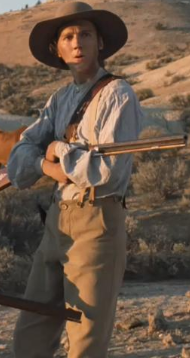
It may be surprising to see Kazan on this list, especially at #2, but she makes it on quality rather than quantity. Kazan was not in a lot of movies this decade compared to some of her peers -- she also spent some time writing -- but whenever she did appear on screen, she was great. I'm glad to have this opportunity to throw some love to my #1 of 2012, which was the only #1 I left off my top 25 (it was an honorable mention). As both writer and star of
Ruby Sparks, Kazan is perhaps more responsible than anyone else for the success of that movie, a sly attack on the lazy screenwriting trope of the manic pixie dream girl. Contrary to what you might think, that was not a role she herself played very often, as her two other choices I considered are oddly similar, both involving characters on long and fateful wagon train trips across country. She may have been a part of the ensemble in
Meek's Cutoff, but she carried the brunt of the effectiveness of the best segment of
The Ballad of Buster Scruggs, which I was also sorry I could not give any more love before now.
Other notable works this decade:
The Big Sick (2017) (liked it),
What If (2013) (really liked it)
Possible detractors:
The Pretty One (2013) (didn't like it)
3. Scarlett Johansson
 Considered for the 87
:
Isle of Dogs (2018),
Under the Skin (2014)
In the end, I really only considered one film where Johansson plays a major role,
Under the Skin, in which she is pretty much the entire thing. Her role in
Isle of Dogs, kind of a random choice to consider as it was only my #15 of 2018, couldn't really be said to move the needle in that giant ensemble cast. But that doesn't tell the true story of Johansson's decade, one in which I twice named her as one of three "who had a good year" (let's forget the once she was named to "three who had a bad year"). Scarlett Johansson was all over this decade, doing increasingly interesting and increasingly more realistic work as the 2010s went on. We always knew she could play a fembot -- that's pretty much the role in
Under the Skin -- but her Oscar nomination for
Marriage Story was based purely on her ability to portray an actual person. So when looking to why Scarlett Johansson makes this list, we may have to look more to the films down below this text than those above it.
Other notable works this decade: Avengers: Endgame (2019) (loved it),
Captain America: Civil War (2016) (loved it),
Her (2013) (really liked it),
Jojo Rabbit (2019) (loved it),
Marriage Story (2019) (really liked it)
Possible detractors: Ghost in the Shell (2017) (didn't like it),
Rough Night (2017) (didn't like it)
4. Nicole Kidman
 Considered from the 87: The Killing of a Sacred Deer
 (2017),
Rabbit Hole (2010)
I may have really fallen in love with the acting skills of Nicole Kidman last decade, after following the rest of the world and pretty much snubbing her for the first 10-15 years of her career. But she came on strong at the start of the 2010s by giving perhaps my favorite naturalistic performance of the decade in
Rabbit Hole. That didn't mean she couldn't still groove to the kind of weirdness she found with Stanley Kubrick in
Eyes Wide Shut or with Jonathan Glazer in
Birth. She teamed up with Yorgos Lanthimos for
The Killing of a Sacred Deer and played a perfect type of sultry ice princess (if you'll go with me on that possibility) who isn't quite knowable. Kidman likes to work so her choices haven't always worked for me (
Just Go With It, anyone?), but she has continued raising the bar throughout the decade, perhaps most notably in places I have yet to see her (
Big Little Lies). My kinship with her is such that I feel defensive on her behalf when people snipe at her about plastic surgery or whatever other things they think she's guilty of. If Kidman really is worried about her age, she needn't be. At 52, she still looks great, but that doesn't matter, because those skills translate at any age.
Other notable works from decade: The Beguiled (2017) (loved it),
The Family Fang (2015) (really liked it),
Lion (2016) (loved it),
The Paperboy (2012) (liked it)
Possible detractors: Just Go With It (2011) (didn't like it)
5. Jennifer Lawrence
 Considered from the 87: mother!
 (2017),
Winter's Bone (2010)
It’s hard to believe that Jennifer Lawrence is someone we
have known for only ten years, as her entire known career falls within this past decade. Winter’s Bone may not have
actually been her first professional work, but it was the first time most people
had ever seen her – unless you watched (ahem) The Bill Engvall Show. She went on to be nominated for four Oscars
over the course of the next decade, winning one. Lawrence’s toughness and girl-next-door
authenticity were both on display in Winter’s
Bone, but my favorite performance she gave this decade might be the one
where she had her bearings the least. Darren Aronofsky’s mother! subjects her to nearly von Trierian levels of sadism in a
story about how a young bride’s life is falling apart after her famous older
husband starts losing interest in her, which is only one of a kajillion
interpretations of the film. There’s no other way to interpret the performance
of Lawrence than brilliant as she looks on in horror at the social contract
exploding around her, and her house becoming the site of nothing less than
biblical apocalypse. It’s sad to me that Lawrence has taken a step back from
the spotlight as I am interested every time I see her name attached to a
project.
Other notable works this decade: American Hustle (liked it), The Hunger Games (2012) (really liked it), Silver Linings Playbook (2012) (loved it), X-Men: First Class (2011) (really liked it)
Possible detractors: Joy (2015) (didn't like it), X-Men: Dark Phoenix (2019) (hated it)
Honorable mentions
1. Rooney Mara
Considered from the 87: A Ghost Story (2017), The Social Network (2010)
Other notable works this decade: Ain't Them Bodies Saints (2013) (liked it), Carol (2015) (liked it), The Girl With the Dragon Tattoo (2011) (really liked it), Her (really liked it), Side Effects (2013) (really liked it)
Possible detractors: Mary Magdalene (2018) (didn't like it), Pan (2015) (hated it)
2. Emma Stone
Considered from the 87: Birdman or (The Unexpected Virtue of Ignorance) (2014), La La Land (2016)
Other notable works this decade: Battle of the Sexes (2017) (really liked it), Crazy, Stupid, Love (2011) (loved it), Easy A (2010) (really liked it), The Favourite (2018) (really liked it), The Help (2011) (liked it), Magic in the Moonlight (2014) (really liked it)
Possible detractors: Aloha (2015) (didn't like it), Irrational Man (2015) (hated it), Movie 43 (2013) (hated it), Zombieland: Double Tap (2019) (didn't like it)
3. Kristen Wiig
Considered from the 87: mother! (2017), The Secret Life of Walter Mitty (2013), The Skeleton Twins (2014)
Other notable works this decade: Anchorman 2: The Legend Continues (2013) (really liked it), Bridesmaids (2011) (loved it), Date Night (2010) (really liked it), The Diary of a Teenage Girl (2015) (loved it), Ghostbusters (2016) (liked it), Her (2013) (really liked it), How to Train Your Dragon (2010) (really liked it), The Martian (2015) (really liked it), Masterminds (2016) (really liked it)
Possible detractors: Hateship, Loveship (2013) (didn't like it), Nasty Baby (2015) (hated it), Where'd You Go, Bernadette (2019) (didn't like it)
Actors of the decade
1. Ethan Hawke
 Considered from the 87
:
Before Midnight (2013),
Boyhood (2014),
First Reformed (2018)
It was a pretty straightforward choice to select Hawke as my
#1 for the decade, as he appeared in three films I considered, all of which
made either my top 25 or my honorable mentions. He has Richard Linklater to
thank for two of those, and as you saw in yesterday’s post, Before Midnight was
the “first alternate,” in other words, the last movie to get knocked out of my
top 25. But as much as I appreciate the lived-in naturalism of the performances
Hawke gives for Linklater, his collaborator for more than 20 years now, I think
my favorite Hawke performance of the decade was the slightly more stylized one
he gave for Paul Schrader in First Reformed. That’s not to say his portrayal of
Ernst Toller is not naturalistic, but it’s a kind of heightened naturalism
consistent with Schrader’s willingness to stray from realism when it suits him.
I was really hoping Hawke would get Oscar nominated for that performance, which would
have been only his third, but at least many other critics groups recognized his
work. Hawke has been a consummate professional throughout his 35-year career
and I know he’s always interested in breaking the boundaries of narrative
cinema. It’s why I’m always interested in seeing his name attached to a new
project.
Other notable works this decade: Daybreakers (2010) (really liked it), Maggie's Plan (2015) (really liked it), Predestination (2014) (liked it), Sinister (2012) (really liked it), Valerian and the City of a Thousand Planets (2017) (really liked it)
Possible detractors: The Purge (2013) (hated it), Regression (2017) (didn't like it)
2. James Franco
 Considered from the 87: The Ballad of Buster Scruggs
 (2018),
127 Hours (2010),
Spring Breakers (2013)
James Franco is not a good guy, but hey, I don’t make the
rules. Okay, I do make the rules, but I’m happy to include Franco based on the
way his performance dominated (in a good way) two of my favorite movies of the
decade. You can’t imagine either 127 Hours or Spring Breakers with any other
actor, not because another actor could not do it – okay, I don’t know that
another actor could do Alien – but because he put such a stamp on those roles that
they don’t deserve to be in anyone else’s hands. The thing that blows my mind
most about Alien is not that he preens like a gangsta, it’s that he’s actually
a scared little boy preening like a gangsta, which most actors would not have
thought to bring to that role. 127 Hours features a guy who is scared in a
different way and is nearly being driven out of his mind from hunger and
exhaustion, which Franco expresses perfectly. He’s not hugely important one way
or another to The Ballad of Buster Scruggs so that’s just gravy. The
much-deserved shaming of Franco in the latter half of this decade was disappointing
to me not because I feel an inherent warmth toward the man, but because it means
that going forward, he won’t likely get the same opportunities to give us more
performances like these.
Other notable works this decade: Date Night (2010) (really liked it), The Disaster Artist (2017) (really liked it), Howl (2010) (really liked it), The Interview (2014) (loved it), Oz the Great and Powerful (2013) (loved it), This is the End (2013) (really liked it)
Possible detractors: Rise of the Planet of the Apes (2011) (didn't like it), Why Him? (2016) (hated it)
3. Adam Driver
 Considered from the 87: BlacKkKlansman
 (2018),
Inside Llewyn Davis (2013),
Lincoln (2012),
Star Wars: The Force Awakens (2015)
Adam Driver may be the most interesting case on this whole
list as he packed a decade’s worth of good performances into essentially a
half-decade. Okay,
Inside Llewyn Davis
isn’t the second half of the decade, but I love his performance as Al Cody more in
retrospect than I really recognized it at the time. (“Outer … SPACE!”) Speaking
of outer space, it was when he emerged as Kylo Ren in 2015 that I started to
appreciate the things that had eluded me about Driver when I first encountered
him on
Girls (the few episodes I watched). Three excellent turns as the
unhinged spawn of Han and Leia really sold me on his innate skills that go well
beyond his kind of mumblecore beginnings. This is the way Hayden Christensen
wished he could have played Anakin Skywalker. Then my Driver lovefest was
bolstered by his work with Spike Lee in
BlacKkKlansman,
in which he has to act the part of a guy who’s acting a part, which is no mean
feat. At decade’s end I feel like I want Adam Driver to be in every new movie
that gets made, and the rest of the world is catching up to me as he has now
been nominated for Oscars in consecutive years.
Other notable works this decade:
Frances Ha (2012) (loved it),
J. Edgar (2011) (really liked it),
Marriage Story (2019) (really liked it),
Paterson (2016) (loved it),
Silence (2016) (liked it),
Star Wars: The Rise of Skywalker (2019) (really liked it),
While We're Young (2014) (liked it)
Possible detractors:
The Dead Don't Die (2019) (hated it),
The Man Who Killed Don Quixote (2019) (didn't like it)
4. Paul Dano
 Considered from the 87: Looper
 (2012),
Meek's Cutoff (2011),
Ruby Sparks (2012)
If we went back to the start of the century, Paul Dano would
be even higher than this, but he doesn’t get to count movies like The Girl Next Door and There Will Be Blood for this decade.
That said, the films he does get to count are quite solid, and his power coupling
with Zoe Kazan (I just looked, they’re still together!) gets its second entrant
on this list. Paul Dano has been kind of John Cusack’s heir apparent as the “weird
looking” everyman leading man, which is appropriate as he and Cusack played the
same character in Love & Mercy, a
film that I could have revisited by virtue of it landing at #4 for me in 2015,
but decided to rule it out from the start. He used those traits to their fullest
in Ruby Sparks, but his intense
desperation has been present in all of his roles this decade, from Looper to Swiss Army Man (another top ten movie I pre-emptively ruled out) to
Meek’s Cutoff. He’s pursued other
interests the last few years, making his feature directing debut with a film I
did not like, Wildlife. Here’s hoping
he gets back to what he does best.
Other notable works this decade:
Love & Mercy (2015) (loved it),
Okja (2017) (really liked it),
Prisoners (2013) (really liked it),
Swiss Army Man (2016) (loved it),
12 Years a Slave (2013) (really liked it)
Possible detractors: Cowboys & Aliens (2011) (hated it), Wildlife (2018) (as director) (didn't like it)
5. Chris Pine
 Considered from the 87: Hell or High Water
 (2016),
Spider-Man: Into the Spider-Verse (2018),
Wonder Woman (2017)
Captain Kirk was the role that really put Chris Pine on the
map at the end of last decade, but that isn’t even where he’s shone in this
one. He really demonstrated the range of his abilities in performances both
essentially Kirk-like (funny and charming, the way he is in Wonder Woman) and those that are pretty
much the exact opposite of that (laconic and world-weary, the way he is in Hell or High Water). In fact, Pine is so
good in Hell or High Water – though he’s
not the only one – that I was kind of shocked when the movie couldn’t find its
way into my top 25 of the decade, settling for an honorable mention. His role
in Spider-Man: Into the Spider-Verse
is a lot more brief, and at first I kind of wished they’d given him Jake
Johnson’s role until I saw how good Johnson was. The point is, at this
point, I’ve decided beyond a shadow of a doubt who is the “best Chris” out of
him, Hemsworth, Pratt and Evans. Just as he charmed the pants off of Gal Gadot,
he’s charmed the pants off me, and that’s not even the only mode he has – not nearly.
Other notable works this decade:
Horrible Bosses 2 (2014) (liked it),
Star Trek Into Darkness (2012) (liked it),
Z for Zachariah (2015) (really liked it)
Possible detractors: Into the Woods (2014) (hated it), A Wrinkle in Time (2018) (didn't like it)
Honorable mentions
1. Oscar Isaac
Considered from the 87: Inside Llewyn Davis (2013), Star Wars: The Force Awakens (2015)
Other notable works this decade: Annihilation (2018) (really liked it), Drive (2011) (liked it), Ex Machina (2015) (loved it), A Most Violent Year (2014) (liked it), Star Wars: The Rise of Skywalker (2019) (really liked it)
Possible detractors: The Addams Family (2019) (didn't like it), X-Men: Apocalypse (2016) (didn't like it)
2. Javier Bardem
Considered from the 87: Everybody Knows (2018), mother! (2017)
Other notable works this decade: Pirates of the Caribbean: Dead Men Tell No Tales (2017) (liked it), Skyfall (2012) (liked it), To the Wonder (2013) (really liked it)
Possible detractors: The Counselor (2013) (didn't like it), The Last Face (2017) (hated it)
3. Mahershala Ali
Considered from the 87: Moonlight (2016), Spider-Man: Into the Spider-Verse (2018)
Other notable works this decade: Green Book (2018) (liked it), Hidden Figures (2016) (liked it), The Place Beyond the Pines (2013) (liked it)
Possible detractors: Alita: Battle Angel (2019) (didn't like it)
Directors of the decade
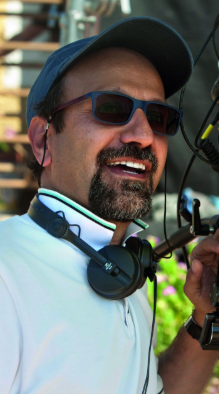
1. Asghar Farhadi
 Considered from the 87: Everybody Knows
 (2018),
The Past (2013),
A Separation (2011)
Farhadi easily wins the decade by being the only director
who had three films that I considered for the decade’s best. What’s more, the
fourth film he released this past decade – 2016’s The Salesman – won the best foreign language film Oscar, giving him
two (along with A Separation).
That I think this film is only mediocre is an indication of just how successful Farhadi has been. (Or maybe I’m still just mad at the movie for stealing the
Oscar that rightfully belonged to Toni
Erdmann.) When you consider that his 2009 film, About Elly, was also unearthed and made more generally available
this decade, and that it is also a masterpiece, you have a truly staggering
body of work to grapple with. Two other factors contribute to making these ten years all the more astonishing for Farhadi: 1) He’s an Iranian director, yet somehow avoided
the type of government scrutiny that torpedoed fellow countryman Jafar Panahi,
while still making films that seem pointed in their criticism of Iranian
society; 2) He directed films in three different languages, those being Persian,
French and Spanish. What a decade.
Other works this decade: The Salesman (2016) (liked it)
2. Richard Linklater
 Considered from the 87: Before Midnight
 (2013),
Boyhood (2014)
Linklater came within a hair of getting two films in my top
25, which would have made him one of only two directors to do that (see my #3),
and only the third to do it in the history of these decade-end lists (Cameron
Crowe had two in my top ten last decade, if you can believe it). But just
because I decided Before Midnight was
only my #26, it doesn’t take away from a decade of critical acclaim and
exquisite invention for Linklater. It was impressive enough when he submitted
his third entry in the best “aging along with the characters” series since
Michael Apted’s Up movies. But then,
as something of a surprise, the very next year he told everyone he’d been
working on a movie for the past 12 years using the same four actors at
different ages. Who does that? The
answer is, the guy who last decade was experimenting with rotoscoping, which
allowed him to put Waking Life on my
last best of the decade list. Linklater has never been flashy with his
technique (unless, of course, he’s using rotoscoping), but he has established himself as able to convey
thoughtful humanism like few of his peers. He’s also great with nostalgia,
as exemplified in one of the other movies below.
Other works this decade: Bernie (2011) (really liked it), Everybody Wants Some!! (2016) (really liked it), Last Flag Flying (2018) (haven't seen it), Where'd You Go, Bernadette (2019) (didn't like it)
3. Byron Howard
Considered from the 87: Tangled (2010), Zootopia (2016)

Who? Exactly. And that explains why the only man to get two movies in my top 25 for the decade is only my third-best director for the decade (and why I haven't mentioned this feat in either of my previous decade-end posts). It's hard for most people, including myself, to understand exactly what role a director has in bringing an animated movie to the screen, since animation is one arena in which we don't typically think of the director as the primary auteur. In fact, the director rarely even has sole credit, and that was the case with Howard in each of his movies that made my top 25. But the fact remains that whether with Nathan Greno on
Tangled or Rich Moore on
Zootopia, Howard helped make two absolutely fantastic 2010s animated movies a reality. Did he tell the actors how to say their lines? Did he suggest how to "set up the camera"? To the first, probably yes; to the second, I have no idea. But without Byron Howard, I do know that it's a far less rich decade for animated movies. And hey, at the very least, we know he can hold a stuffed animal.
Other works this decade: None
4. Barry Jenkins
 Considered from the 87: If Beale Street Could Talk
 (2018),
Moonlight (2016)
I greatly regretted that I couldn’t
summon more affection than I did for
Moonlight.
I placed it in my top ten for 2016, at #10, but I felt like there might have
been films below it where my personal affection was slightly higher (sorry,
Hello My Name is Doris). If the whole
film remained at the high level of its first third, which showcased a director
I’d never heard of (Barry Jenkins) and all that this “newcomer” possesses in
terms of craft, it’d have been my #1 of that year. I did revisit
Moonlight for this project to be sure I
didn’t actually love it (I didn’t), but there was no artificial inflation when
it came to
If Beale Street Could Talk,
which floored me the first time and then pushed me through the floor into the
earth on the second. Here Jenkins’ skills were matched with a story that was
overall more resonant with me, and it left me in a near-stupor state.
Moonlight would have probably resonated
with me just as much if it had kept its momentum from the Mahershala Ali-led
first act, which only goes to show that not only can Barry Jenkins pick ‘em, he
can film ‘em too.
Other works this decade: None
5. Gaspar Noe
 Considered from the 87: Climax
 (2018),
Enter the Void (2010)
Gaspar Noe made three films this decade, two of which I saw
twice, and I also twice watched his one movie from last decade, Irreversible. That means I was never
long without the singular weirdness of this French filmmaker, who is known for
putting his entire closing credits – often smashed at the screen in crazy fonts,
and with strobe lights and industrial music – at the beginning of the film
rather than the end. Each Noe film thereby introduces you to the fact that you’re in
for a ride, and a ride is what you get. Not only is his
subject matter always shocking – graphically sexual in nature when it is not
graphically violent, and sometimes both at once – but he films it in a way you’ve
literally never seen before. Most of Enter the Void is shot from above, from
the angle of a wandering spirit flying over the city of Tokyo. In Love, you get
a head-on view of a penis ejaculating. In Climax, the camera goes literally
everywhere, in such a manner that the only way I could think to describe it in my
review was that it seemed to be on a fishing rod dangling over its subjects. I’m
not sure how Noe does what he does, but I love it.
Other works this decade: Love (2015) (liked it)
Honorable mentions
1. Joel & Ethan Coen
Considered from the 87: The Ballad of Buster Scruggs (2018), Inside Llewyn Davis (2013)
Other works this decade: Hail, Caesar! (2016) (didn't like it), True Grit (2010) (liked it)
2. Damien Chazelle
Considered from the 87: La La Land (2016), Whiplash (2014)
Other works this decade: First Man (2018) (really liked it)
3. Bong Joon-ho
Considered from the 87: Parasite (2019)
Other works this decade: Okja (2017) (really liked it), Snowpiercer (2013) (loved it)
Okay! That'll do.
Thanks for tuning in to a full week of year-end and decade-end writing. Tomorrow I will look forward to 2020 in a very explicit way by introducing you to what I'm going to be watching as a monthly series this year.
Oh, and here's that asterisk I promised you earlier:
* - I only belatedly noticed that Adam Driver also appeared in four of the 87 movies when I determined he had a small role in
Lincoln. I had already written most of this post at that point, so I did not adjust my perspective mid-stream and allowed Blunt to keep the spotlight to herself.