Thursday, April 21, 2022

Star Wars Episode III: Return of the Star Wars

Okay, that subject makes no sense.

We all know that in Star Wars parlance, Episode III refers to a 2005 movie called Revenge of the Sith. We're not up to that in our viewing, and who knows, we may never get there.

But in the parlance of my family, we had our third movie-length Star Wars "episode" this past weekend on Easter, which was finally watching Return of the Jedi -- the third movie made, but Episode VI using the episode numbering that all Star Wars fans, and most other people, are familiar with. 

I say "finally" because it's been an eternity since we watched The Empire Strikes Back, following a similar eternity since we had watched Star Wars. (I won't name the episode numbers for those movies, because when they first came out, they had no episode numbers, and that's the way I like it.) 

Maybe "eternity" is a bit of an exaggeration. It was actually October 4, 2020 that we watched Empire, so only 18 months ago. But my hope had been that Empire would be such a hit with my kids that they would want to gobble up all the remaining Star Wars movies in short order, and that we wouldn't have another gap like we had between watching Star Wars, which we did on December 22, 2017, and Empire.

This gap was shorter, but it was still indicative of my kids' feelings on these movies in general.

However, maybe that's about to change. 

"What did you think of it?" I asked my older son, who is now 11, as the credits rolled. 

"Good," he said. "I finally like a Star Wars movie."

He knew there was something at stake here just as much as I did.

The younger one didn't directly answer the question, but he was making shooting noises and explosion noises in the play he uses to fill up brief moments of downtime, so that may have been answer enough.

The Book of Boba Fett was what gave me confidence to reintroduce Star Wars to these guys now. They're into "Star Wars" as a concept, having watched two seasons of The Mandalorian in addition to Boba Fett, but the movies have never worked for them -- "too old," "too slow," "looks bad" have been the sorts of complaints they've offered. They obviously don't have a geek's relationship to the material, but I had hoped that recognizing a lot of characters/locations from Boba Fett when they watched Jedi would be the kind of thing that would crystallize feelings of excitement about the show and transfer them to the movies.

I'm not sure if that really happened, or if they just liked the movie on its own terms. I didn't subject them to an extensive exit interview and was just happy with the positive reaction. But because they didn't spontaneously emit exclamations like "Hey, it's the Rancor!" or "Hey, it's a Gamorrean Guard!", I wasn't sure they actually felt that excitement of recognition I had been relying on, and wasn't sure if the movie would work for them at all.

They did seem to find the Ewoks somewhat charming, as my wife and I would sometimes produce little laughs at things Wicket W. Warrick (the original www?) would do, and they seemed to go along with that. 

If I had to guess what finally clicked for my older son, I'd suggest it was the happy ending -- the repudiation of the Emperor (I won't say "death," because we now know he didn't actually die), the redemption of Darth Vader, and the survival and celebration of all the characters we love. I think the ending of Empire had left him perplexed, since there were so many open wounds, and he was unaccustomed to watching movies that ended on a down note. Jedi definitely wraps things up in a nice tight bow.

Then I suppose I also must consider the role of the scope of the movie. We watched it on the projector in our garage, which is as close to a cinematic-style projection as he's ever gotten on a Star Wars movie. We've started to watch a lot more things in our garage so it's perhaps less of a novelty, but a Star Wars movie deserves a bigger canvas, and this one finally got one.

I have to say it was not a 100% success. In the context of his positive review, my older son did mention the pacing issues and made a comment along the lines of "For about ten minutes there I was bored to death." But I guess if a movie's slow patch only lasts ten minutes, that's not too bad, and it means something came back along to stoke your excitement after that. (I don't know which ten minutes it was that bored him so much, but in my mind I imagine it's the conversation between Luke and Leia on Endor. Then again, the moment he did call back to a couple days later was when Luke elevates C3PO to prove to the Ewoks that Threepio is a god, which he obviously enjoyed and which was only a minute or two before that.)

Now the problem is, where to go from here. If their interest in Star Wars is, indeed, stoked, we could move on to one of the next two trilogies. The question is: Which one? If we went only in the order the movies were released, it would obviously be time for The Phantom Menace. But it's possible we'd have better luck with the newer (and better) movies, meaning my personal favorite of the most recent six, The Force Awakens, would be up next. That also picks up where the story left off.

The only thing is, I don't know if they're ready for the successive deaths of each of the three main characters in the next three movies they watch. If my son was perplexed by the ending of Empire, I can only imagine how he'd handle a whole movie where Luke Skywalker is irritable and glum, only belatedly redeeming himself at the end. Should Luke Skywalker be a character who requires redemption? (This is what I asked myself, and still ask myself, about The Last Jedi.)

I suppose whichever way we go, if we go, I will let my children dictate the pace this time. I've already force-fed them the three movies I really want them to see, and anything from here is a bonus. We'll watch Obi-Wan Kenobi when it comes out soon, and if they continue to enjoy that, it would make an easy transition into watching the same actor portray that role in the three prequels. 

But I won't push it on them. They need to make the choice now. My indoctrinating days are over.

Part of me thinks that now that they've enjoyed Return of the Jedi, they should try Star Wars and Empire again. But I've got to just let it go. 

Recreating your own childhood with your kids is an enterprise that is always doomed to failure, be it Star Wars, or the books you loved as a kid, or the sports you played. You can make suggestions and point them in directions, but they've got to take it on themselves at some point, or it can't possibly have that value to them.

At least we went 1-3 on the original trilogy, which was much better than a big fat zero. 

Tuesday, April 19, 2022

Retroactively non-fatal

The following post contains spoilers about The Lost City.

When I sided with my one son over my other son and picked The Lost City over Fantastic Beasts: The Secrets of Dumbledore for our Easter Monday viewing, I knew I was taking a minor content risk. The film is rated M by the Australian ratings scale, which means it's supposed to be appropriate for children over 15. 

My younger son is barely half that old, so it may seem like bad parenting of the highest order to expose him to this. But you have to consider that movies like Spider-Man: No Way Home are also rated M, and we've pretty much opened the floodgates to all Marvel movies, even for the eight-year-old. I'm still hemming and hawing on the Avengers movies, which get pretty intense as they go along, but he's already expecting to see Doctor Strange in the Multiverse of Madness in a few weeks, and I don't expect to stand in his way.

Besides, an obvious corollary for The Lost City seemed to be Uncharted, which we watched a couple months back, which he handled just fine -- with the exception of the single "graphic" scene in that movie. But even that scene didn't scar him and I would have been happy to accept about that much "graphic" content in The Lost City.

Which is what I was expecting. A parental guide I read online said that there was a shooting, but that it had a "happy resolution." I didn't realize at the time that this was kind of a spoiler, but they were vague about it and didn't even mention who got shot, or what that happy resolution was.

Well, the shooting victim in question was Brad Pitt's Jack Trainer, who appears in what amounts to an extended cameo. (That's also a spoiler, unless you've seen the trailers, which give it away.) And it's actually pretty graphic.

When he disappears from view after being taken out by a sniper's bullet, you don't see him again. But you do see parts of him. Namely, his blood spatters on nearby Channing Tatum, and it's not just blood, but some viscera as well. In fact, the writers could not resist some panicked dialogue from Tatum in which he talks about the character's brains being on his face and in his mouth.

I grimaced. My eight-year-old son did not need this.

But the parent guide had said there was a happy resolution to the issue, and indeed, I was not surprised to see the character pop up in the middle of the closing credits, apparently fine to the naked eye as he drops in on our other two leads during their yoga class. Tatum mentions the brains again, and Trainer quips "We only use ten percent of our brain anyway. I'm just using a different ten percent."

So the movie's one gruesome death was retroactively ruled not to be a death.

I immediately started wondering: Does this change my son's impression of how violent the movie was?

For starters, I should say that my son seemed far more disturbed by the scene where Sandra Bullock picks leeches off Tatum's back and butt. And I don't think the bare butt was the concern. He just finds leeches gross, and I don't blame him. 

He did seem okay with the shooting. At the end he told me it wasn't possible, if someone got part of their brains blown out they probably couldn't survive. He's not wrong, though I suppose some brain loss is survivable.

Knowing right away I might want to write this post, I asked him on our way out of the theater whether knowing that the character survived changed his impression of that moment after the fact. Sure, he was led for the whole movie to believe that he'd watched a man get his brains blown out, but now that he knew that wasn't what happened, and the man was alive making jokes in a yoga class, did that change his impression of the graphic content itself?

He told me that it didn't. He was pretty firm on that topic and couldn't be swayed from it. But it didn't seem to disturb him much either, so that's good.

I suppose if you want to fake out the audience that a character died, you have to reveal the fakeout fairly soon afterward, otherwise the trauma of that moment will live with that viewer for the rest of the movie -- even as he or she may be having fun with, and enjoying, the rest of the movie.

For a great example how to do this, you need to go to another Bullock movie: Speed. This contains one of the great fakeouts in movie history, where the Bullock-driven bus hits a baby carriage as a woman, presumably the mother, is pushing it across the street. You have long enough to watch the carriage hurtle through the air, an instant pit of nausea in your stomach, before the carriage crashes harmlessly to the street, spilling only the aluminum cans it was carrying. You only have to live with the possibility of a dead infant for about five seconds.

"Killing" a character and then bringing him back an hour later during a totally unwarranted and frankly unbelievable end credits sequence is not the same kind of fakeout. If you didn't want us to think of this loveable rogue as having died, don't give us an hour to sit with his death, his brains splattered all over Channing Tatum and our mourning consciousness.

Monday, April 18, 2022

I did watch that cannibalism movie on Disney+ after all

So it was the parental controls we'd set on Disney+ after all. 

That was why I couldn't find Mimi Cave's Fresh on Disney+ when I first looked for it Saturday night. When my son was watching a lot of Simpsons on his iPad last year, we must have set it so he couldn't watch more grown-up things -- I don't know, maybe certain Marvel movies or something. 

That was the only thing we could have had in mind by trying to restrict him, but those efforts were fruitless anyway as we've been able to find all the Marvel movies on there, plus other things that we would definitely be trying to avoid if we thought he'd had any interest in them. For example, I watched The Hand That Rocks the Cradle on Disney+, which starts out with a gynecologist committing suicide after he's accused of molesting one of his patients -- which he totally did do.

I'm not sure what else I can find on Disney+ now that I've lifted the parental controls -- some porn, maybe? -- but Fresh for sure came to the surface once I'd done so.

Now of course, this is not original Disney content. The cannibalism practiced in Fresh is by human beings, not singing animals. Like most streaming giants, Disney does not want to limit itself, even if the intellectual property it genuinely owns is vast enough to sustain a streaming service. 

No, they've branched out to something called Star, on which you can find The Hand That Rocks the Cradle, Crimson Tide (just mentioning one other title I've watched) and yes, a decidedly R-rated movie about a cannibal surgeon who kidnaps women and steadily sells off their meet to a black market of customers willing to pay top dollar.

In the U.S., Fresh is on Hulu, which makes more sense. But Hulu isn't a thing in Australia, so the Hulu content gets passed around as parts of other agreements. I don't know if Star generally gets Hulu content, but I do know some of it goes to other Australian streaming services, like Stan. (Not to be confused with the star of this movie.)

I wonder how many children might innocently come across a movie like Fresh because the parents thought "Why do I need to put parental controls on Disney+? If my little girl's not old enough now to process Bambi's mother being murdered by that hunter, she never will be." 

Little Sarah might take a while to get over these nice young women being slowly murdered by Sebastian Stan, though.

You might find Stan any number of other places on Disney+. He's the winter soldier, of course, and there's been so much chatter about him being able to play Luke Skywalker, given his physical similarity to Mark Hamill, that he'll probably turn up in that role eventually, even if Disney has chosen to go with the Hamill deepfakes to this point. 

But as a cannibal surgeon who's also quite the talented chef? Little Sarah wasn't expecting that.

I really enjoyed the movie when I watched it on Easter night (eating the body of Christ being the tie-in? The only body I was eating was that of a chocolate Easter bunny). It's twisted and discomfiting in all the ways you would hope, while also remaining light enough on its feet, with just enough of a sense of humor, to keep from being hopelessly depressing. (In fact, I'm seeing that some places list it as a "comedy thriller," though I wouldn't go that far.)

I'll tell you one thing I couldn't get out of my mind, though, but first I have to give you a SPOILER WARNING -- even if the thing that I'm spoiling happens relatively early on in the narrative.

The character we follow is Noa, played by Daisy Edgar-Jones. She thinks she's finally met a normal guy -- er, bad judge of character I guess -- and after witnessing their courtship for about 25 minutes, we finally learn otherwise with the onset of some very bad behavior and some late-rolling opening credits. The delayed credits were a great touch, and I wish we lived in a world where it were possible to get someone to watch Fresh without telling them what it's about -- because that would be quite the surprise.

Anyway, that's not the spoiler obviously.

Noa understandably makes an attempt to escape early on, and the surgeon, Steve, has to punish her for it. Not that he doesn't plan to be punishing her anyway, as he's already told Noa this is not going to end well for her. So whether this is his idea of an increased severity, or maybe some warped notion of leniency, he makes his first cut into Noa and extracts the following:

Her ass.

I'm sure it's preferable to losing a leg or an arm straight away. Maybe the ass has to be the first to go. But it left me thinking about the logistics of it all.

Can you sit without an ass? And what exactly does not having an ass look like?

We don't get any shots of Edgar-Jones without any clothes on to be sure. But you better bet I looked at that area of her body whenever we got a fully clothed body shot of her. 

For one, I wanted to see if they made any effort to show her as ass-less. The answer is, no, not really, which might have just been because it would look too weird and they needed her to function mostly normally as the lead actress in the film. 

But then I was also curious about how they would use the character given that she doesn't, you know, have any cushioning down there. 

Although she does crawl around a lot in the early stages of her recovery, by later in the story she's sitting with some regularity, and without any apparent pain. 

Maybe it's that even in something that might think of itself as a "comedy thriller," dwelling too much on her ass might have detracted from everything else the film was trying to do.

In any case.

I'm now interested in going on a bit of a hunt in the Star section of Disney+ to see what other sick and twisted treasures I can find. 

The one thing that sort of confuses me, though, is that I thought I might be accessing an American version of Disney+, since I set it up through my American version of iTunes -- which would make anything on Hulu unavailable. When I tried to go on D+ on my phone to search for Fresh the other night, it said I was "traveling," and that the titles might differ from home. Maybe it's that Australia is home in this case, and my phone is the American entity because of my American Google account? That could be it, as the Google Play store is definitely an American version of that.

But now I'm off in the weeds for sure. 

Anyway, Fresh is worth seeing, though probably not over dinner.

Leftover chocolate bunnies, maybe. 

Sunday, April 17, 2022

The one origin story I didn't know

I hadn't planned to watch Fantastic Four -- the original from 2005 -- on the Saturday night of Easter weekend. I wanted to watch the new horror? thriller? Fresh, which was supposed to be playing through the Star portion of Disney+. I don't know if it's just not playing in my region, or if the kid safe settings are preventing me from searching for a movie about cannibalism -- the last shouldn't be a factor, since it looked like some other more adult-oriented options were available. (And too bad, because I would have liked to write a post about watching a cannibalism movie on Disney+.) In any case, I couldn't find it.

As I was doing a tedious scroll through the alphabetical listing of movies, though -- for some reason thinking that maybe the search feature was broken -- I did come across Fantastic Four. All three Fantastic Four movies, in fact, none of which I've seen.

This is a pretty weird anomaly for me. 

It was obviously different in 2005, but nowadays, there just aren't many superhero movies I miss. And if I do miss them, it's more likely the second or third in a series, like when I opted out of last year's Venom sequel. I'm usually on board for at least the first movie in a superhero series, just to see if happens to be my bag.

Not Fantastic Four. I didn't see the original in 2005, nor the sequel in 2007, nor the reboot/remake/reinterpretation in 2015. I think I was considering seeing the last until the reviews were so terrible. 

While I have marveled about this -- no pun intended -- in the past, and thought it was kind of funny to keep it out there as this notable exception to my usual superhero completism, I figured I'd finally see what Fantastic Four was all about on Saturday night.

Now, I should say that I do know a fair bit about the characters -- their names, their powers, the actors who played them. Enough of that has creeped in by osmosis that the movie didn't feel foreign to me. 

I did not, however, remember what their origin story was, and that it involved the characters going to space and being blasted by gamma rays.  

There were a number of interesting differences I noticed between a superhero movie made 17 years ago, before the MCU had started, and one made today. 

For one, I was shocked at how short it was. The running time is listed as 105 minutes, but there are nearly ten minutes worth of credits. The film was in its big climactic showdown before I had a chance to get comfortable on the couch. (And that showdown reminded me of one of my original favorite superhero movies, Superman II, as it occurs at street level in a city -- only the heroes outnumber the villain here, whereas the reverse is true in Superman II.) After Morbius, that's two straight superhero movies that ran shorter than two hours -- almost unheard of.

Then of course I couldn't miss how white it was. Ioan Gruffud, Jessica Alba, Chris Evans and Michael Chiklis are all white, as is Julian McMahon as Doom. The movie does feature Kerry Washington as Ben Grimm's blind love interest, so at least there's that. By 2015 they'd realized they needed to be more inclusive so they cast Michael B. Jordan as Johnny Storm. (And as a sign of further enlightenment, they don't worry about the fact that he's a different race than his sister, played there by Kate Mara.)

Then there's the comparatively poor usage of Alba, as giving women proper agency was not much of a thing in 2005. Yeah, she can turn invisible and she can control some sort of energy field with her hands, but really, she's more of a pretty face and a sex symbol than a character to be proud of. Part of it is Alba's bad performance; she really doesn't bring anything to the role. But she's wearing a low-cut outfit that features her cleavage in nearly every scene, and the movie doesn't shy away from the titillation factor of Sue Storm needing to be naked to take full tactical advantage of her invisibility. We don't see anything of course, but we see Alba in her underwear a couple times, or quickly moving to shield her nudity from someone.

It's hard to put myself back into the headspace of the superhero world we lived in then, when the MCU was still three years off, and when the only superhero franchises of note were Batman, Superman, Spider-Man and X-Men. So while Fantastic Four might have been fine for 17 years ago, it's a bit limp by today's standards, even with a few fun performances and decent special effects. 

Just to honor my modern completism, I may continue on and watch the other two existing movies, in part because I understand something interesting might happen at the end of Rise of the Silver Surfer (no spoilers in case you care about such things but also have not seen the movie), and I'm always interested to see how they handle things like that. 

Then again, there are still three Spider-Man movies I haven't seen -- the last with Toby Maguire and both with Andrew Garfield -- so I guess I will have to have the philosophical debate about which superhero completism has more value to me. 

Or, I could just, you know, watch other types of movies and take a break from superhero movies for a while, at least until Doctor Strange comes out, which I think might be a lot more gratifying.

This post had nothing to do with Easter, but it's going up on Easter. So, happy Easter.

Saturday, April 16, 2022

A Good Friday of New York favorites

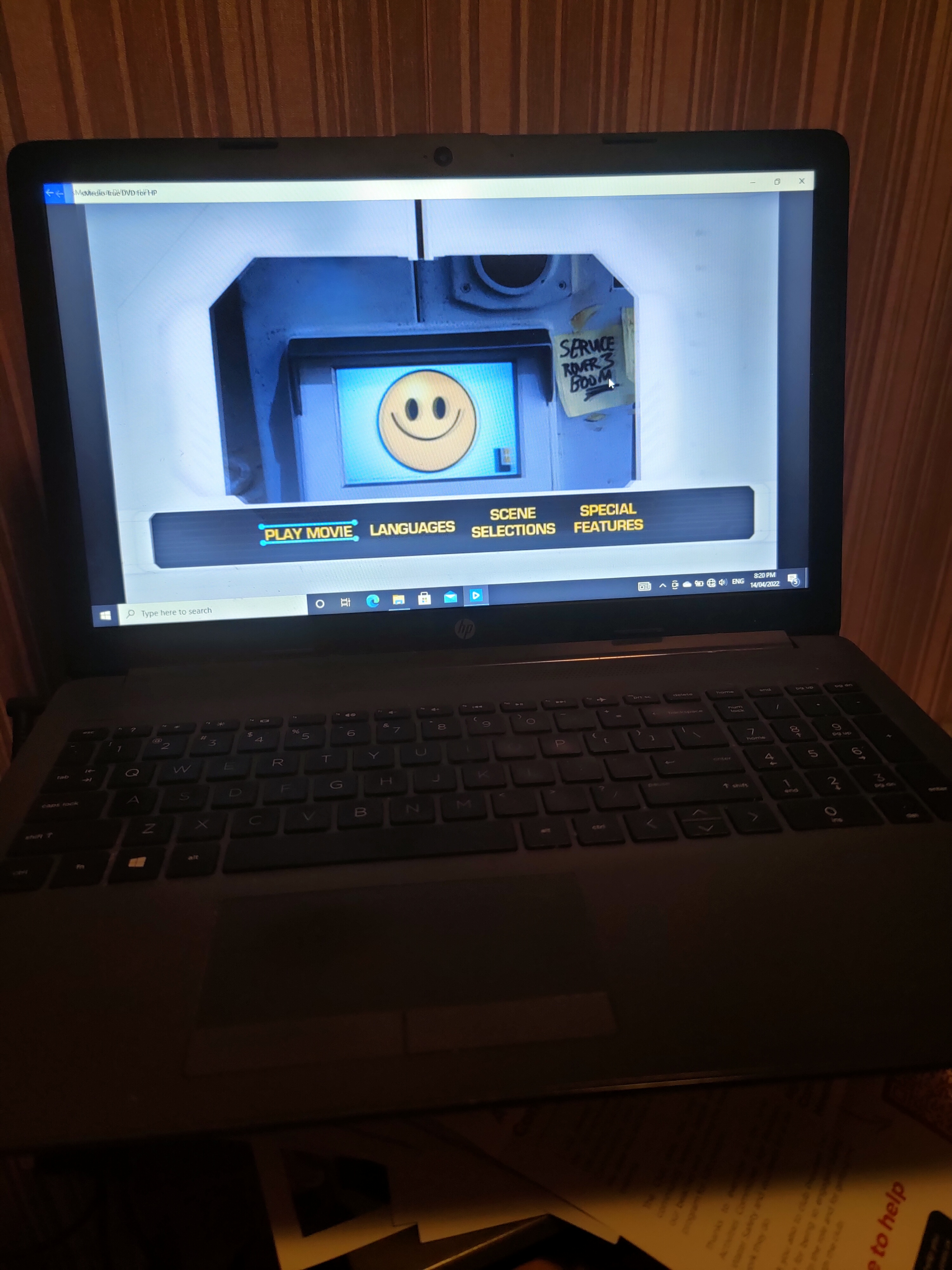
We're on day two of a four-day weekend for Easter, and for some reason, I view these long weekends as a way to take a deep dive back into my collection of personal favorites. I already started on Thursday night with Moon for my 2022 #1s series, then Friday night, it was the double feature of other American DVDs I can suddenly watch now that I've reclaimed my old laptop as a region 1 DVD player, as discussed in yesterday's post. 

I've always made a connection in my mind between Kissing Jessica Stein and The Guru. For most people, it seems, these were throwaway romantic comedies that they immediately forgot about the moment the credits rolled, if they saw them at all. For me, they were sneakily emotional, feel-good favorites that both landed in my top ten of their respective years, which happened to be consecutive years in 2002 and 2003. (Actually, now that I look at it, I can see The Guru was only #11, but I now like it better than all but three of the movies that were ahead of it.)

I'd had occasion to think of both movies in recent months. The Guru, of course, was one of my inspirations for watching Bollywood movies this year, and I name-checked it in my introduction post for Audient Bollywood. Then I mentioned Kissing Jessica Stein in my recent post about Everything Everywhere All at Once, when I talked about movie characters overcoming their prejudices, specifically related to embracing the LGBTQI+ people in their lives. This movie has just about the most moving example of that for me -- not because the gesture is so great or unexpected, but simply because of the performance given by Tovah Feldshuh in that moment.

Other than a new viewing of both being overdue -- I hadn't seen either in more than ten years, and in fact last saw both in a six-month period from September 2010 to March 2011 -- and other than them both being on a DVD format I could now access, I had additional reasons to program them both for a Good Friday double feature on my projector. Let's look at some other similarities between these films:

1) Both are set in New York. That's likely a key to why I loved them so much. I lived in New York from 1998 to 2001, getting out just six months before 9/11. Since these movies both came out less than two years after 9/11, I'm sure they helped me experience a romanticized notion of New York that particularly helped me at that time.

2) Both are sex positive. Heather Graham's porn star in The Guru is not the least bit stigmatized for her career choice, either by the other characters or the film itself, and everyone associated with the porn shoots we see is pretty much a sweetheart. She beats herself up, but nobody else does. Jessica celebrates sex of all kinds -- hetero, gay and lesbian (making a distinction between a gay male couple and a gay female couple in the film). Which leads to ...

3) Both are gay positive. It's right there in the text of Jessica, and as alluded to just now, Helen's also good friends with two men in a relationship. But The Guru has a gay subplot as well, as Graham's character's fiancee (Dash Mihok) doesn't actually want to marry her because he's in love with a fellow firefighter (Bobby Cannavale). Then there's the trans character, long before we were really dealing with that in the culture, who works as a fluffer on the porn shoot. Played by Dwight Ewell, not only is she wonderfully supportive to Graham's Sharona, but she's also got one of the best lines in the movie: "I'm more woman than you'll ever have, pencil dick."

4) Both have exactly one scene that takes place in an Indian restaurant. Seriously! Jimi Mistry's Ramu works at an Indian restaurant when he first arrives in New York, getting fired from the gig when he pours chicken tikka masala over the head of an abusive customer, who denies the authenticity of the dish while speaking to Ramu in an accent that would make The Simpsons' Apu blush. And Indian is where Jessica and Helen go for dinner after the couple drinks they have on their blind date, when Helen finally convinces Jessica not to bolt in the nearest taxi. 

5) Both are directed by people with really long names: Daisy von Scherler Mayer for The Guru and Charles Herman-Wurmfeld for Jessica. In fact, both names have exactly 21 letters. Given their evident abilities, both should have had busy careers but I'm sorry to say that didn't end up being the case.

6) And speaking of that, both films are fronted by an actor -- the title character, in fact -- whose charisma and acting chops suggested they should have had much longer careers. Alas, I can count on one hand the times I've seen Jennifer Westfeldt or Jimi Mistry turn up in another film. Mistry at least popped up in Blood Diamond, Ella Enchanted, 2012 and RockNRolla, but never in a big role. IMDB says he has 37 acting credits overall, but again, no starring roles. For Westfeldt the pickin's were slimmer: only 30 credits, with only one other film credit I've seen, 2011's Friends With Kids -- though she had to both direct and write it to get cast in the main role, and the attempt to reproduce Jessica Stein was not a success. She also had a recurring role in one season of 24, though I've forgotten that.

More informally, both films give me a sense of joy that few other romantic comedies can touch, resulting from a perfect combination of writing, tone, structure and cast. (I haven't even mentioned that The Guru also has personal favorite Marisa Tomei.) The best evidence of this is that even though it was almost 11:30 when I started watching Jessica, I didn't come close to falling asleep.

I used to proselytize for these movies whenever I could, with whoever would listen. But now it's been 20 years since they were made, and I'm not sure if I can easily find either of them beyond my own region 1 DVDs. In fact, it's been more than 20 years, as Jessica has the year 2001 in its closing credits, while The Guru has the year 2002, though they were both released theatrically the year after that.

Well, if you're reading this and you haven't seen either movie, I hope you can find them, because it might be too far for you to travel to come watch them in my garage in Australia. I mean, if you only like arthouse films and documentaries, maybe skip them. But if you think the romantic comedy can be cinema's greatest genre when done correctly, when tweaking familiar tropes to give them new freshness, when finding just the right actors to speak just the right words, then you owe it to yourself to seek these two movies out.

And if you feel a natural fondness for a New York that may no longer be, and maybe never was, then all the more reason. 

Friday, April 15, 2022

A good use for old junk

Near the start of the pandemic it was decided that I needed a new computer. But because I am old school, I wanted a new computer that was like my old computer. I was attracted to such obsolete features as a built-in DVD player, so my wife proactively bought me a cheap-o version of this old computer, a Hewlett-Packard, without us really having said the final word on the matter as far as I was concerned. But when it arrived I was happy enough to see it. I liked this model in theory -- it had treated me well on my previous instance before that one got too old -- and I wasn't ready to be thrust into "the future," where every laptop is small and light and spartan.

The proviso was that it could just be a short-term computer to get us through the next year or so, then maybe we'd pass it on to my older son, who was about to hit double digits. We couldn't have known how short term. 

From the start there was something off about this computer. It would freeze at apparently random times, and I mean a fatal sort of freeze, which could only be cured by a reboot. The mouse just stopped moving and never moved again. 

We thought it was browser-related, but the issue occurred in other browsers as well. I searched possible fixes and toyed with different solutions, at times thinking I had gotten past it, only to have the issue rear its head again. Then the general performance, even when it wasn't freezing, started to suffer.

We might have tried to replace it under warranty, but I happened to discover that my sister had the exact same issue on her HP. That made it seem less likely that the issue wouldn't reoccur on a new piece of hardware. And by this time our circumstances had changed. My mother passed away that June, and within a couple months we started getting access to the money we had inherited from her. It seemed easier just to walk away and to buy the computer I am typing on right now -- a Dell.

I wiped that HP and gave it off to my son, which excited him to no end. But even with a fresh copy of the operating system and no applications I had installed that could have been contributing to the issue, the computer was a sluggish piece of shit. Even my computer-starved son was jack of it pretty quickly. It got placed on a shelf and started collecting dust. It did make the transfer to our new home, but pretty soon after, it could be found in a box of old technology waiting to be recycled. 

Within the last few months, another piece of our technology, this one a long-time stalwart, also fell on hard times. Our region-free DVD player, which had caused us no issues for the first eight years of its life, developed some sort of mechanical issue with its tray. I had to use various methods to force it open, and I'm sure that made it worse. I toyed with the idea of opening it up and seeing if I could set this Doohickey A back to where it needed to go in Slot B, but to be honest, I'm not very mechanical. I suspected I'd just waste a lot of time unscrewing screws. So now I guess we're ready to walk away from it, which is just as well, as we barely ever borrow movies from the library anymore.

But that left all the DVDs and BluRays that I brought over from the U.S. unplayable. Sure, some of those movies can be found on streaming, and others I could rent, or just not watch right now. We live in a world where you can get most of the movies you want at the tap of a finger, but there are some you just can't find at all right now. Take my Settling the Scorsese series, where I just cannot get my hands on a copy of New York, New York. Any precious American DVDs that I can't get my hands on otherwise would just need to wait their turn to get watched, at some point in the near or distant future.

Then on Thursday night, I was planning to watch my next 25th anniversary #1. You may remember I am watching all my previous favorite films of the year, dating back to 1996, in 2022, leading toward the goal of determining my favorite year-end #1 of all time, which I will do at the end of 2022. I'd scheduled Moon, my #1 of 2009, a movie I own on a region 1 DVD that I now cannot play.

I thought about looking for it on streaming services and renting it on iTunes, but I wanted to watch it on our projector in the garage, and for some reason, iTunes rentals are incompatible with our projector. I've complained about this before. 

Then suddenly a solution occurred to me.

Now, a laptop is not restricted to playing DVDs from the region in which it was manufactured -- not that they aren't all manufactured in China -- but you can only change the DVD region a finite number of times. I think it's four or five. So if you are desperate to play something from another region, you can, but that brings you one region change closer to never being able to change the DVD region again. And heaven forbid you mess this up and end up on the wrong region for your last change.

But this doesn't matter at all on a laptop that's sitting in a box of junk waiting to be recycled.

So Thursday night I fished out that old HP, found its power cable and fired it up. By the end of its life, it had gotten so poor in the performance department that you basically couldn't do anything on it. That was how it was starting to look this time too.

But I eventually did get it to get past its various startup issues and maxed out disk usage, the source of which I have been unable to determine. I did disable various game setups my son had put on it during the short time that he had it, and maybe that helped.

I calculated that I could change the DVD region and play my American Moon DVD, because the processing required in playing a DVD was a lot less than various other activities a person might attempt. 

As it turned out, I calculated correctly.

Once I successfully changed it to region 1 -- with still three region changes left after this one should I need them -- and got the movie to start in a native player that the OS recommended to me, it was smooth sailing from there. I connected it up to the projector and watched the whole thing with nary an issue -- beyond the fact that I was falling asleep a bit. Never mind, it was the fifth time I'd seen the movie.

At first I thought the issue would be in having the necessary permissions to change the region. On a bunch of other things I'd tried to do, I was reminded that this was not an administrator account. That was by design, as we didn't want my son to be able to do anything he wanted on this computer. But it was annoying me now. Given the login/startup issues, I didn't want to try to log in as an administrator, which would require me to remember the password I'd set on it as well, some 18 months earlier. 

Turns out, you don't need to be an administrator to change the DVD region. 

The whole thing left me very pleased with myself. I immediately started brainstorming the other American DVDs I might queue up for a viewing, possibly as soon as tonight.

Now, I do still have one practical limitation. I don't believe this computer will play my American BluRays. The computer was old school enough that its internal DVD player did not include that additional capacity. Whenever we'd wanted to watch my American BluRays at my old house, we always had to use the region-free DVD player. 

A possible solution is that I connect my current external DVD player, which I use with my new computer, to the old computer. If the region is determined at the operating system level rather than the hardware level, then this player could just be a vessel for that setting. Then again, I'm not sure if that one will play BluRays either.

Another solution is just to be aware that some movies, as discussed earlier, are always going to be inaccessible for one reason or another. Maybe at some point in the future I will be able to watch those BluRays again. Maybe I never will. Life will go on either way.

The end of physical media has already arrived for most people. It hasn't yet for me. And if I can use some old junk to hang on for just a bit longer, I'll do it. 

Thursday, April 14, 2022

My first lunch movie

I'd seen the trailer for Morbius so many times -- shielding my son's eyes whenever he was sitting next to me -- that by the time it actually came out, I'd lost any enthusiasm for it I may once have had. 

I expected it to miss in the theater, but an opportunity arose on Tuesday that I couldn't pass up.

I've written before about how my workplace is in the same building as a movie theater, directly above it by a couple floors. When I wrote the previously linked piece, I had yet to use my proximity to motion pictures to fit a movie into my workday. Since then, I think I've gone after work at least once.

But never before had I done a thing that a friend in Chicago used to do, which I always thought was awesome: Take a movie lunch.

Pre-pandemic, this guy used to sometimes go to the movies during a long lunch -- a good life hack for us dads, who frequently have to do kid-related things after work until we go to bed. He had people reporting to him, and though of course he also reported to someone, he could work this out on a day when those people were absent or otherwise occupied. 

For me, a movie lunch was a distant dream. Even with the theater right there, beckoning me, I was rarely in the office at a time when my schedule wasn't being closely observed by another person. In fact, prior to the job I currently have -- same employer, different department -- we actually had to clock out during lunch and clock back in. That feels like a different time now, a time when the default condition was that everyone was in the office, and all eyes were on you and what you were doing.

The last two years have slackened things considerably. Not only could you be doing whatever you want while working from home -- assuming no one was checking in on you regularly -- but that sort of freedom even often exists in the office, because it's become increasingly common that you are not actually in the office on the same days as the other people who would theoretically be monitoring your diligence. 

Ordinarily, I wouldn't think of taking two hours off in the middle of my workday, even if no one was monitoring me, just because I have a better work ethic than that. But on Tuesday, a perfect storm of circumstances allowed it to happen. For one, it was the first week of school holidays, meaning no new issues of any urgency were being raised to us by the schools. (I work for the department of education.) Secondly, my boss was on leave. In a way, that might put me more in demand than if she were here, since her boss would be leaning on me instead of her. And he did contact me about a couple things that morning, but by lunchtime I calculated -- correctly, as it turned out -- that he had pretty much gotten that out of his system for the day.

The third thing was that none of my other co-workers were in the office, and though we keep up via chat during the day, no one was taking note of my physical movements. Just so it wouldn't look like I'd disappeared, I told them I'd be taking a long lunch "to meet a friend for lunch." (Hey, movies are sort of a friend, aren't they?) I didn't tell them what time I was leaving or how long I'd be gone, so if anyone tried to find me during the period I expected to be gone, it could plausibly be considered to fall during that amorphous period. If it was late in that period, well, they'd just assume I'd left later. If it was earlier in that period and someone asked me about it, I could just say that lunch ran longer than I expected. Hey, during school holidays, no one's really too worried about it. 

It was finally my time for a lunch movie.

The movies I most seriously considered were Michael Bay's latest, Ambulance, and the latest Fantastic Beasts movie. Both of those are more than two hours, though, and I thought that was just pushing it a bit too much, even with all the favorable conditions described above. 

Morbius was "only" 104 minutes. A superhero movie of reasonable duration. Go figure.

I still tried to get down there as late as I could for the 12:30 start time, but when I still hadn't finished the Chinese lunch at my desk at about 12:35, I wolfed down the rest so as not to miss any of the movie. I calculated poorly the number of trailers that would play beforehand, because there were still seven or eight more minutes before the movie started once I got there. This was the point where I felt a little stressed about this undertaking, but I was committed at that point -- even if the movie didn't cost me anything because I got in free with my critics card.

I enjoyed the movie pretty well. I liked the way it was shot and it was sort of different enough from other superhero movies to feel fresh. I did start to nod off about two-thirds of the way through, proving that a darkened cinema has that effect on me no matter what time of day it is, but it wasn't really a function of how much the movie stimulated me. Rather, my drowsiness was the result of waking up at the crack of dawn to take the train into the city, and going to bed typically late the night before. (I wake up at the crack of dawn even though I don't need to. My body can't be negotiated with.)

A comic book movie was probably the wrong one to choose in the sense that you can't duck out as soon as the credits begin. Fortunately, Morbius had two post- or mid-credits sequences very early on, and I calculated that was probably it and bolted. If I missed one more self-indulgent Easter egg, well, so be it.

It was funny to return to my desk after the movie, as I felt all sleepy and bleary. When I returned to all my stuff sitting there, I had this idea that the other people who were there -- people I mostly don't know all that well and wouldn't come to talk to me about anything -- had been wondering what had happened to me. But no one was sitting within five desks of me, so I doubt anyone really noticed.

I did have an email from my boss' boss that had gone unanswered for more than an hour, but it wasn't urgent, and he's not the type to ask why I hadn't gotten back to him sooner.

I'm glad I did it just because this is something I've always wanted to do, and I don't know when my best other opportunity will come. But it didn't feel like the glorious life hack I had hoped, and there was enough anxiety about how quickly the movie would be over that it probably detracted from my enjoyment somewhat. I stayed at work a bit later to compensate for the missed time, though only about 30 minutes of it.

Also after I got out, my friend had responded to my message about choosing Morbius because of its comparatively short running time. He said "Yes, 80 minutes is ideal."

Eighty-minute movies are almost never a thing anymore, and if they are, they usually go directly to streaming. But maybe that will be the way to go if I do get this opportunity again sometime.

It won't be a superhero movie, I can tell you that much. 

Saturday, April 9, 2022

Audient Bridesmaids: Extremely Loud and Incredibly Close

I started my epic, ongoing, 201-movie series, Audient Bridesmaids!

If you remember my discussion in this post, I've decided to go in reverse order through all the best picture nominees I've never seen ... all 201 of them. Starting with 2011's Extremely Loud and Incredibly Close.

If you remember also in that post, I said I would probably not write about each one -- just because it was a best picture nominee doesn't mean I have something profound to say about it -- but that I would at least start out by writing about the first one. And that I would try to get to it soon to strike while the iron is hot. 

That strike occurred four days after I put up the post, Monday night, when I had the shakes with what felt like COVID. Seemed like a good night to do some "homework."

(I never tested positive for COVID, despite taking four RAT tests, even though my younger son did in fact test positive. He's now testing negative and we are all fine, though we did spend the past week isolating.)

I remember there had been a lot of backlash against Extremely Loud and Incredibly Close, the book of which I had read and quite liked. Movies about 9/11 -- this was released ten years and three months after that day -- have always flirted with being topical in a way that was either too confronting or too self-important. In fact, the only one I can remember receiving universal plaudits was United 93, and with good reason.

Stephen Daldry's film, like the Jonathan Safran Foer book on which it was based, takes place a year (or two?) after 9/11, where the main character's father (played by Tom Hanks) died in one of the World Trade Center buildings. Oskar Schell (Thomas Horn) and his father used to like going on treasure hunts, kind of like what we would now call geo tracking, and Oskar, in a vain last attempt to connect with his father, blankets the city of New York trying to find the lock for a key he finds inside a vase that belonged to his father. His only clue is a name on the envelope: "Brown."

It's oscar (Oskar) material for sure, and it is also confronting for sure. Horn gives a really good performance for an actor his age, but it is also a pretty discomfiting one -- he's an eccentric kid, who would have likely made us uncomfortable even if he weren't processing the death of his father. His preternatural intelligence combined with some on-the-spectrum personality traits makes him hard to look at at times. It's not either a strength or a weakness of the film, just confronting.

Foer's work often feels like it is biting off more than it can chew, which works for me in the film adaptation of Everything is Illuminated but not quite as well in this. This film could have been called Everything Everywhere All at Once, as it deals with a lot. It assigns a sort of cosmic significance to everything and doesn't have much of a sense of humor, which would be possible even in a 9/11 movie if it had just adjusted its perspective a bit. The product that's there is definitely good if the alternative is to call it bad, but I did feel myself resisting it a bit. Final verdict: three stars.

In this series I think it makes sense to issue a judgment about each film to determine if the best picture nomination was warranted. In this case I would say no, since a three-star movie is pretty well short of that minimum threshold. But I wasn't offended by it and I was glad to see it. Could have used a bit more Sandra Bullock and given us a more interesting resolution with the character played by Max von Sydow, who accompanies Oskar on many of his Saturday afternoon excursions around the five burroughs.

Ray will be the next movie in this series at some point in the future, at which point that will clear all the best picture nominees from the 21st century. 

Friday, April 8, 2022

The right year to rewatch Eight Men Out

Less than a month ago, baseball owners and players stopped fighting with each other, ending a lockout that started at the beginning of December and ended up pushing back opening day by a week. Their beef? The inability to reach a deal on the next collective bargaining agreement, and all the profit-making possibilities that agreement would entail for each side. 

Everyone seems to think the owners got the better deal. Ain't that how it always is.

So it feels particularly appropriate that on the eve before this year's opening day, as per my tradition, I watched an old favorite about ballplayers and their owner fighting with each other, and the owner winning.

The ballplayers were the 1919 Chicago White Sox, the owner was Charles Comiskey, and the movie is, of course, John Sayles' Eight Men Out, which I've seen about three times, but not since the early 1990s. 

The reason eight players on the White Sox famously agreed to throw the World Series for $10,000 apiece, which would make untold amounts more for the crooked gamblers who put them up to it, was that they felt used and abused by Comiskey, who gave them flat champagne as a "bonus" for winning their division, and refused to pay them contractually obligated bonuses, adjusting their playing time downward to make it impossible to reach the statistical milestones those bonuses depended on. (I always think of how starting pitcher Eddie Cicotte, played by David Straitharn, was denied a $10,000 bonus that he would have received if he'd reached 30 wins. He was stopped at 29, largely because the manager didn't play him for a two-week stretch, on orders from the owner.)

As evidence of how history always remembers the winners and not the losers, only one name from that group of players (Shoeless Joe Jackson, who also appears in Field of Dreams) ever made it to household name status when the players were banned for life by new commissioner Kenesaw "Mountain" Landis. Comiskey? That baseball park bore his name for 80 years until it was demolished in 1991, and I'm sure the casual fan thinks he was just swell.

I can't say the movie left me "pumped" for opening day like these movies are designed to do, as it's a pretty solemn and somber affair. However, to be honest, I did not require much pumping. I was already as pumped as I needed to be.

The movie itself probably didn't hold up quite as well for me as I was hoping, though much better than my disastrous revisit of the aforementioned Field of Dreams a few years ago. Over the years I'd built it up as this stately example of prestige filmmaking, but I found parts of it hokey and obvious and dependent on unsubtle exposition. Fortunately, by the end it did land in that same profound space of feeling sorrow and confusion for everyone involved, as no one really got out of that unscathed. Even as an apparent "winner," Comiskey looks at the end like it took years off his life. 

Two takeaways:

1) I had forgotten Charlie Sheen was in this. He's of course one of the stars of my favorite baseball movie, Major League, and him appearing in this and two Major League movies made me wonder if we should think of him a bit like we think of Kevin Costner in terms of being typecast as a baseball player. I even thought of a blog post comparing Sheen's and Costner's baseball outputs, but a) you don't need a third straight baseball-related movie post on this blog, and b) Costner probably has him beat just for sheer quantity of baseball movies -- I count four for Costner, and none is a sequel. 

2) I had also forgotten the director was in it, and in fact, I didn't actually know what he looked like so I had to look him up afterward. Strange that I wouldn't know how John Sayles looked considering how long he's been making movies. His role as one of the guys investigating the possible fix is an all-business turn that convinced me he's pretty good at this here acting thing. 

In the past, my movie watching would suffer a bit once the baseball season started. But one benefit of moving to Australia is that the games play in the morning/early afternoon, and most of my movie watching is at night. So, expect my usual stream of new viewings, and regular posts whenever I think of something actually worth saying. 

Thursday, April 7, 2022

A head start on my annual baseball movie

There are many wondrous and glorious things about Richard Linklater's Apollo 10 1/2: A Space Age Childhood. It makes me nostalgic for a late 60s Texas childhood I never had, and it brings back the vastly underappreciated artistic form of rotoscoping, of which Linklater is the primary practitioner. 

But it also has baseball.

I've spent the past week knee deep in the upcoming baseball season -- yes, they finally came to an agreement on the next collective bargaining agreement -- as part of my roles as commissioner in two different sorts of fantasy baseball leagues. 

A very busy rush leading up to a deadline for one of these leagues on Wednesday afternoon left me yearning to blow off steam with a form of movie escapism, before I watched a baseball movie the next night as my annual Opening Night Eve tradition. (I've got the movie picked out, now I just need to figure out if it's streaming anywhere.)

Linklater's movie -- which I only just learned existed last Friday night -- gave me both escapism and baseball. 

(If it contained baseball, one might ask if it's really an escape?)

The movie involves recollections of the weeks and months leading up to the moon landing in 1969, when Linklater was about nine, though the character seems a wee bit older in this film. It also sets the scene of Houston at that time so perfectly, you'll feel like you were there itself.

Among those things is his memories of the newly opened Houston Astros ballpark, the Astrodome, as well as games of little league and games of indoor baseball, involving baseball cards, when the weather outside wasn't cooperating. 

Baseball, memory, nostalgia, it's all wrapped together in one thing, and Linklater's film delivered me untold amounts of bliss on this front.

And when I wake up tomorrow, there will be baseball on TV. 

Sunday, April 3, 2022

A very talented Hollywood family

Mid-week this week I learned there was a new Judd Apatow movie hitting Netflix on Friday. Exhibit Q of how I have had my head in the sand when it comes to news about upcoming movies.

Since I went the whole week without reviewing anything on ReelGood, I wanted to make sure to see The Bubble as soon as possible. (It's been a schizophrenic time on ReelGood. Three weeks ago, I reviewed no movies. Two weeks ago, I reviewed four movies. Last week, I reviewed no movies again.)

But I actually took it one step further than that. I decided to get myself primed on Thursday night by rewatching my #2 of 2020, The King of Staten Island, which I've decided (after one viewing) is my favorite Apatow-directed movie, especially after The 40 Year Old Virgin came up short on a revisit last year. 

I always suspected I have might like Staten Island more than I should have, though I do know some other people who think it's the bee's knees. A second viewing -- to confirm or reverse my initial impression -- had been in the back of my mind for a while now, and the Friday debut of The Bubble made a good excuse to finally get it on the docket.

Nope. I still loved it. Great movie.

The Bubble is actually a very different sort of movie for Apatow, a Hollywood satire that resembles something like Don't Look Up or (way back when) Wag the Dog in tone a lot more than it resembles something like This is 40. It's also a COVID-era satire more explicitly than any movie that has yet been made, or at least that I've seen.

And you know what? I really liked this too. A friend threatened to set me off on the wrong foot by messaging me, just before I started, that it was so bad he had to turn it off, but I laughed a lot and really enjoyed the absurd spirit of it.

I'm not here to talk in depth about either of these movies (there will be a review of The Bubble up, presumably on Monday), but rather, to talk about four key participants, who all happen to be in the same family.

Apatow has long been an ardent practitioner of nepotism, but as it turns out, he's one of those who gets away with it given the quality of what he's working with. When he casts his wife, Leslie Mann -- an actress before she met him -- and his daughters Maude and Iris, it's no Adam Sandler casting Jackie Sandler situation. These are three talented women, and they make his projects immeasurably better.

First let's start with Mann. I have been fond of her ever since I first saw her, in another personal favorite, The Cable Guy. Mann met Apatow while she was auditioning for the film. I'll admit I find her adorable, but she's also frigging hilarious. She has a real knack for comedy that has been on display in both Apatow's films (Knocked Up and This is 40 in particular), and those with which he appears to have no involvement (such as The Other Woman and Blockers). She can also bring it in scenes that are played more as drama, though examples do not immediately come to mind. And though she has made an appearance in many of Apatow's films, he's got a judicious sensibility for how to use her -- for example, she's not in either Trainwreck or The King of Staten Island. She's a spoiled actress in The Bubble, and Mann gets the perfect balance between going over the top and grounding the character in something familiar. She takes a lot of the ways we would expect her to play the role and flips them slightly, which is a strength of the film on the whole. 

The family member who is in Staten Island is their older daughter Maude, who is currently 24. (They got planning that family pretty quickly after Cable Guy, though it should be noted that they obviously didn't rush things too much, as they've never looked back.) Maude Apatow has become known to people who watch Euphoria, though I am not one of those, so I know her from The King of Staten Island. (And about four other of her father's films in which she played children of varying ages, though I wasn't focusing on her work when I watched those movies.) The work she does in Staten Island is really strong. She takes a role that could have been a throwaway -- the main character's sister, who leaves for college early on in the narrative -- and gives it an incredible amount of specificity. She's a straight talker who shows equal parts love and annoyance with her wayward sibling, and she's got that New York attitude without overplaying it. The strength of her character shines through without her seeming like a saint, and it's one of a handful of smaller performances that gives this film its enviable verisimilitude.

The remaining daughter is Iris, who is 19, and who was also in those earlier Apatow films. I came to really notice her in the Netflix series Love, in which she played a child actress, and did so with a real -- here's that word again -- specificity. She was bratty but had a heart, and it's something she must have seen a lot in her peers, if not displayed herself, growing up in such a family. (The bratty part at least; the heart part is not so certain.) In The Bubble she plays a vapid Tik Tok star who is hired to appear in the film within the film not because of any acting ability, but because she has 120 million followers. There are a lot of ways to overplay a vapid Tik Tok star, but she resists all of those instincts to give us what a real 2022 19-year-old Tik Tok star looks like -- flat affect, above-the-fray attitude, and a way of dismissing you that is all the more eviscerating for its lack of effort. It's one of the funnier low-energy performances I have ever seen -- Steven Wright would be proud. 

Nepotism most often annoys us, and rightly so. But some people who started their careers as favors to family members -- Sofia Coppola and Jason Schwartzmann within the Coppola family alone -- really blossom.

Others, like the Apatows, had it all along. 

Saturday, April 2, 2022

A sad explanation for Bruce Willis' choices

Two 1990s action icons may have seen their careers end this week -- one by his own stupid actions, and one by something far less within his control. 

Bruce Willis had taken on the aspect of a laughingstock in recent years, a man so indiscriminate in his choices that he might have appeared in a teenager's first backyard movie if there were a couple thousand dollars in it for him.

But aphasia is no joke, and now we may never see Willis in a movie again. 

It was announced this week that the actor has been diagnosed with a form of brain damage that prevents its victim from being able to formulate or comprehend language. Presumably, that includes the speaking of lines of movie dialogue, and the ability to react to other people's lines of dialogue.

It means he's retiring from the business.

It's a sad day. 

Sadder: Apparently he was really being taken advantage of on set. It was clear he didn't know what was going on, couldn't remember his lines, etc. But they just kept on rolling him out there, making money off him. One might argue they did it to make Willis himself enough money so that he would be set once he could no longer work, but I'm skeptical. 

I can't remember where Willis stands in our good graces outside of the bad movies he's been appearing in, whether he's on the correct side politically (I remember some possible Republican leanings) or whether he's a good guy personally (I remember Kevin Smith hated him on Cop Out). I suspect the undeniable charm and charisma he once displayed had long since curdled into something far more toxic. I could look it up, but today is not the day to do so. 

At the height of his powers, though, what a movie star.

I won't go on at length about him as I might in an "in memoriam" piece -- he isn't dead -- but I did think it would be nice to highlight the top five times Willis' star wattage made a huge difference in a movie. That doesn't mean only that a "big name" was needed for the role, or that being a star was what made his performance in it memorable. I could have just called this "top five Bruce Willis roles" but I don't think that's exactly what I mean either. Maybe it is, you be the judge. 

Anyway, here is the list. 

5. Looper (2012) - This was sort of a comeback for Willis as it followed a long fallow period for the actor -- fallow as in not fruitful, though still as busy as ever. Especially paired with Rian Johnson's heady and intriguing concept, it reenergized our relationship with Willis, and Willis did his part to vanquish the accusations that he cared less and complained more. (I suppose he may have complained behind the scenes, but I didn't hear about it.) It's an interesting role in the sense that there is something sinister about it -- there's a moment of very poor judgment that leads to him committing a truly horrific action -- but it all comes from a place of sorrow, informed by all this foreknowledge of his preordained fate, and the loss of a loved one. Anyway, the performance really works for the film.

4. Twelve Monkeys (1996) - Willis really works well with heady subject matter involving time travel, doesn't he? He really communicates the disorientation his character finds himself in in Terry Gilliam's film, which involves trips through war zones, both actual (World War I) and metaphorical (an insane asylum). It's also a performance that eschews vanity, as he's broken and beaten up and sometimes without any clothes. Especially against a performance by Brad Pitt that's characterized by all its tics, you can appreciate how Willis underplays this material, and you really get a sense of his chemistry with Madeleine Stowe.

3. The Sixth Sense (1999) - This was not the first "unexpected" usage of Bruce Willis but it continues his ability to pair up with directors with a certain vision. Willis' work with M. Night Shyamalan was truly of the internal variety -- particularly in their follow-up collaboration, Unbreakable -- and Willis played that perfectly in setting up one of the biggest surprise twists in recent film history. (From which Shyamalan himself may have never fully recovered, artistically, as it set him off on the path that has caused us all to laugh at him so much.) This was one of the first times I remember feeling real pathos for a Willis character, which was present in other of his films but overshadowed by a more dominant tone, such as confidence or wise-cracking.

2. Pulp Fiction (1994) - Less than a decade after he even came on the radar for most of us, Willis already felt like a surprise addition to Quentin Tarantino's follow-up to Reservoir Dogs, and perhaps the first example (along with John Travolta) of Tarantino's knack for 70's style stunt casting, where a big name comes along at the end of the opening cast list to really put a spin on your expectations. Butch Coolidge is probably Willis' second most iconic role, though funnily enough, I just had to look up what his last name was. (Do they ever even say it in the movie?) This role may demonstrate more range than Willis has ever displayed in one performance, from the eternal take of Butch quietly listening to Marcellus' speech, to the anger and frustration involved with the loss of his watch, to baby talk with his girlfriend. This, here, is a star.

1. Die Hard (1988) - Number one had to be Die Hard. The best action movie of all time remains one of the all-time best breakout performances for a movie star. Willis' everyday NYC cop, unwittingly transplanted to La La Land for Christmas, is effortlessly identifiable to the audience -- not because we are police officers or would have any clue how to singlehandedly take down a building full of terrorists, but because John McClane handles every new piece of information with exactly the bemusement/frustration that we would feel, and with the ingenuity we would hope to produce. He's the ultimate aspirational character for a certain brand of audience member, who wants to brave in a time of extreme danger but also knows he or she could end up pulling broken glass fragments out of bloodied feet and praying aloud not to die. 

Honorable mention: 

The Story of Us (1999) - This is a personal favorite that I had to throw in there. It's a different sort of role for Willis, where he plays the estranged husband of Michelle Pfeiffer and the father of two kids. They have a trial separation while the two kids are off at summer camp, and the film considers the couple's present, history, and future together during the course of that summer. I suppose it has the contours of a romantic comedy -- which is actually how we first got to know Willis in Moonlighting -- but it's more poignant and contemplative than funny, and I don't think it produces any easy answers, even if it finishes in a way that feels easier than such a real world situation might be. I love this movie for its ultimate optimism, for the performances (Pfeiffer slays me in a scene near the end), and for its attention to detail, particularly a montage of moments from their history set to "Classical Gas."

All six of those movies were movies I had already tagged on my blog and written about previously. Yep, Bruce Willis has definitely been a big part of my cinematic upbringing. 

As one indication of how poor his choices had been, and how much he was being taken advantage of, he doesn't just have one or two roles in the can, as many actors who are taken from us prematurely do. No, Willis has eight movies in the can. Whether any of them will be worth a squirt of piss, or 90 to 120 minutes of our time, is another matter. 

But maybe we'll be ten percent more likely to watch those movies, and other movies he's made in the past decade, just to appreciate him -- and to see if we can see the signs of this terrible affliction. I regret any time I referred to one of his performances as "sleepwalking" through a movie. It now seems clear that giving those performances was extremely difficult for him, even if it was, at some point, the laziness and disinterest talking rather than the aphasia.

But as I said earlier, today is not the day to impugn Bruce Willis, nor to call in to question any of his past choices. Maybe even the right-wing political leanings were evidence of the aphasia. That would explain a lot.

Until they have a cure, fare thee well, Bruce.